UTRGV students contribute to slang study
A professor emeritus from the University of California, Los Angeles added 185 UTRGV student-submitted slang terms to a decades-long study as part of ongoing national research on college slang.
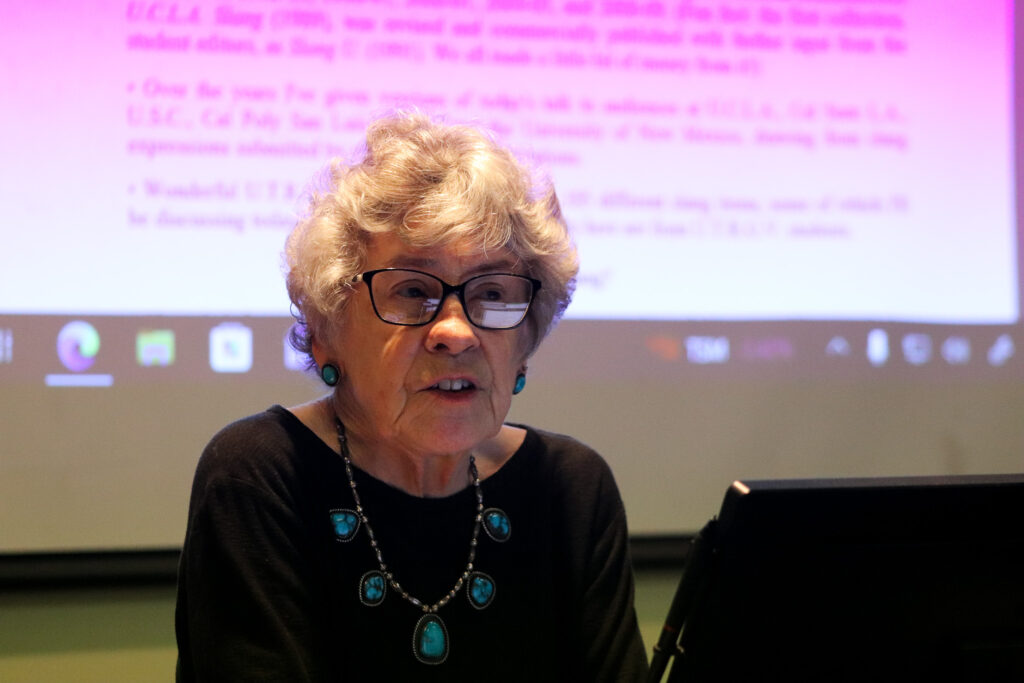
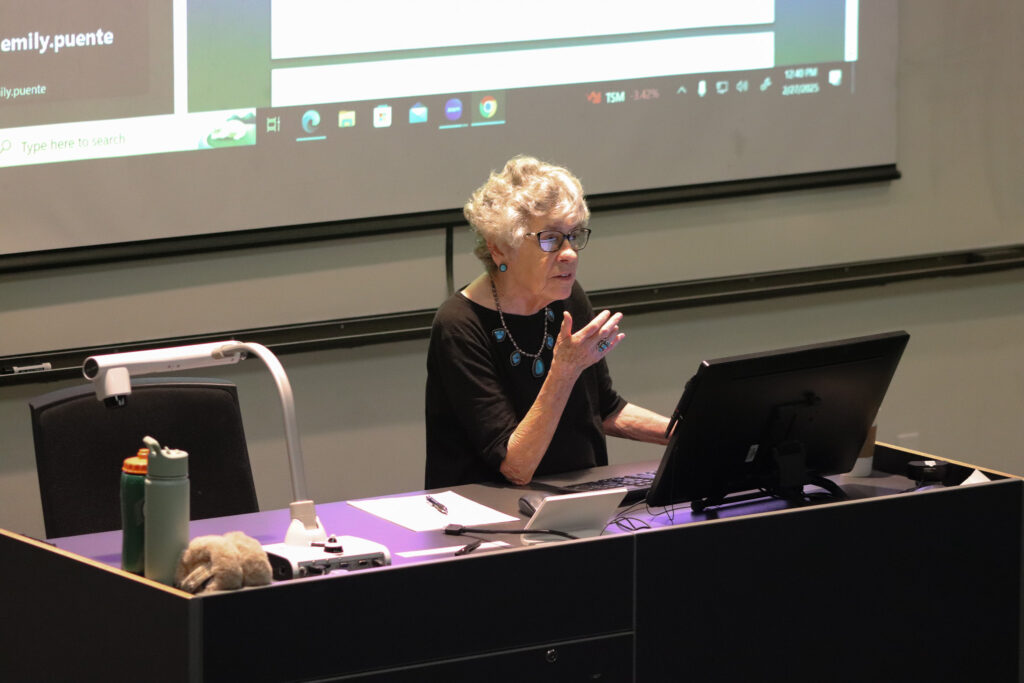
Pamela Munro, distinguished research professor emeritus of linguistics, has researched college slang since 1983. She visited UTRGV on Feb. 27 to discuss her findings.
Munro’s talk “Slang at UTRGV and Beyond” was part of the Linguistics Seminar Series, co-organized by associate professor John Foreman.
Sofia Cantú Sauceda/THE RIDER
Foreman, who studied under Munro at UCLA, said students’ growing interest inspired the event in slang.
“The students in our linguistics club had gotten interested independently in slang and collecting slang expressions,” he said. “I thought, ‘Well, if they’re interested in that, then I should talk to her and invite her to speak with us.’”
UTRGV students contributed to the study through class surveys.
“Students sent five slang expressions they currently use, along with definitions and example sentences,” Foreman said. “In the end, she received about 185 distinct words.”
Sofia Cantú Sauceda/THE RIDER
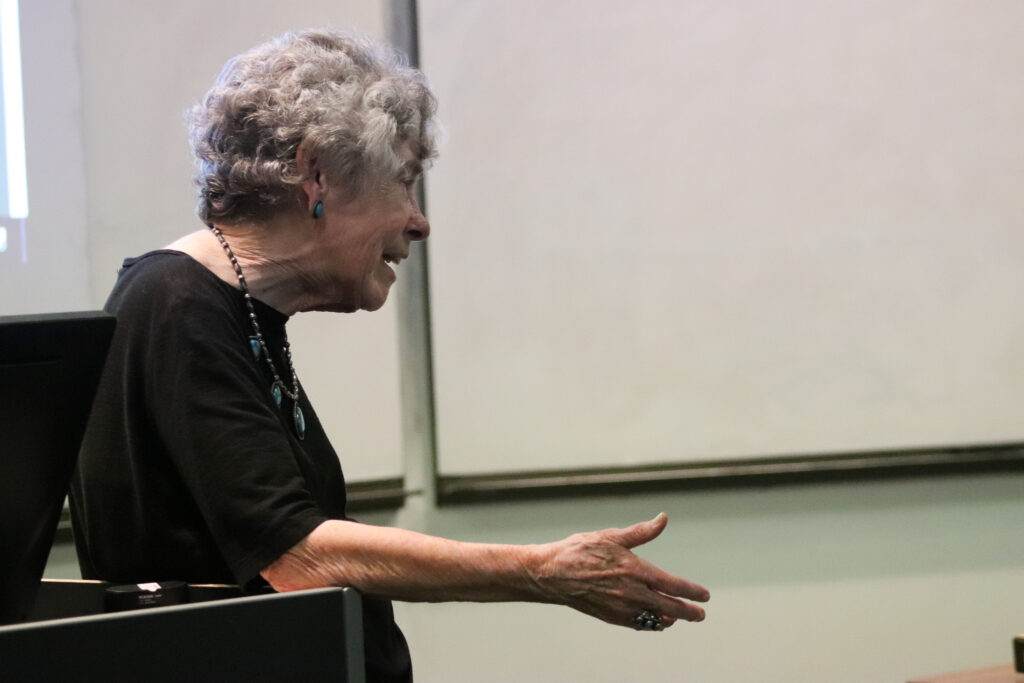
Munro, who has collected slang from universities such as UCLA, the University of Southern California, California State University Los Angeles and the University of New Mexico, noted that UTRGV students stood out in one particular way.
“UTRGV students seem to be different,” she said. “Does this mean UTRGV students have their minds only on higher things? Maybe it’s just that they wanted to get to know me better before raising these topics.”
As part of her research, Munro discussed how college students’ views on offensive language have evolved.
“Everybody recognizes bad words, although in my experience, college students don’t mind much about saying bad words,” she said. “So, [there are] four-letter words, dirty words. Then, there’s blasphemous words. This is not a category that most college students are very sensitive to or worried about.
“For them … when you talk to them a lot about how they feel about these things and how words affect people, it’s what I call epithets, which are hurtful names for people from different ethnic, social, gender, sexual orientation or other groups.”
While past generations focused on profanity and religious language, her findings suggest modern students, including those at UTRGV, are most concerned with language that marginalizes others.
Sofia Cantú Sauceda/THE RIDER
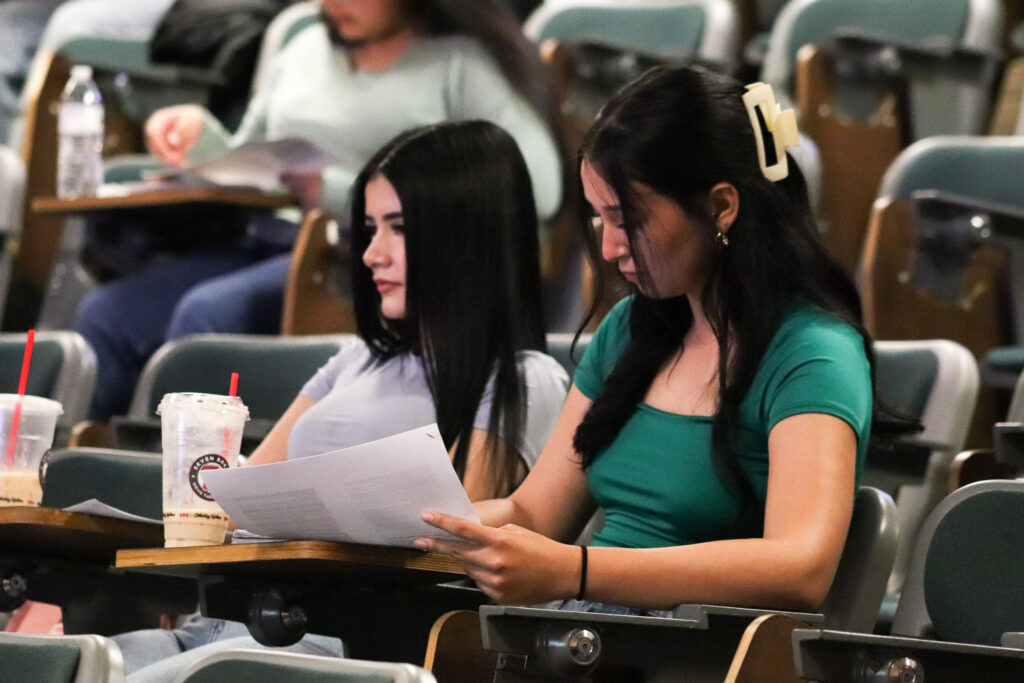
Although the seminar focused primarily on English slang, creative writing junior Myranda Garcia said she hoped for more discussion of Spanish slang.
“I really wanted to hear more about Spanish slang,” Garcia said. “But, it was really nice to see people outside of the [Rio Grande] Valley take interest in UTRGV.”
Foreman also expressed interest in expanding the research beyond English.
“Since we’re here in the Valley, it would be interesting to also get current Spanish slang as well as any kind of mixture of the two,” he said.
During her talk, Munro explained slang is more than just casual speech, saying “it serves as a marker of culture and identity.”
Sofia Cantú Sauceda/THE RIDER
“Slang is informal,” she said. “It may have important functions, for example, as a way for people to recognize other members of their group or to show political solidarity.”
The professor emeritus said slang will stay with people.
“Your slang will stick with you for life,” she said. “They will be ingrained with you to the point that it won’t be slang to you anymore.”