


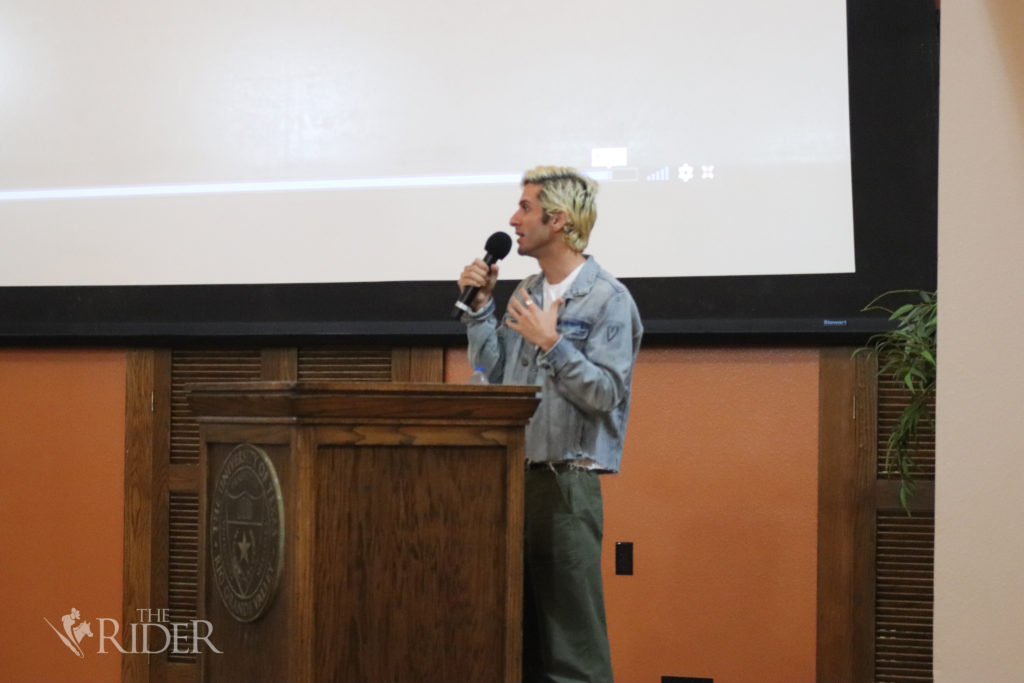
Eduardo Chávez, director, orador, activista, presentador de podcasts y nieto de César Chávez, responde a las preguntas del público sobre lo que significa honrar a su abuelo durante la Serie de Oradores Distinguidos (Distinguished Speaker Series) el martes pasado. El evento se llevó a cabo en PlainsCapital Bank El Gran Salón en el campus de Brownsville. Citlalli Torres/Fotos The Rider
The grandson of civil rights activist César Chávez visited UTRGV in observance of National Farmworkers Awareness Week to encourage campus community members to connect to their history and find their voice.
Eduardo Chávez, an activist, podcast host and director of “Hailing César,” was the fourth speaker of the 2021-2022 Distinguished Speaker Series Tuesday night in the PlainsCapital Bank El Gran Salón.
Chávez said it is important to continue to inform today’s youth and keep his grandfather’s legacy alive.
“My main goal in doing events like this and talking to students is to, hopefully, inspire them to go on a journey similar to mine, to learn about their history, especially if they’re Mexican American and their families are connected to farmworking,” he said in an interview after the event. “Learn about what that work is. It’s more than just a form of labor.”
During the event, a screening of Chávez’s award-winning documentary, “Hailing César,” was shown to the dozens of attendees.
“The goal for this film is really to, hopefully, empower young people to go on their own journeys, and find their own voice and find their own vehicle to be socially conscious,” he said. “The main thing is to have it come from an authentic place and knowing your own history is the easiest bridge to that authenticity.”
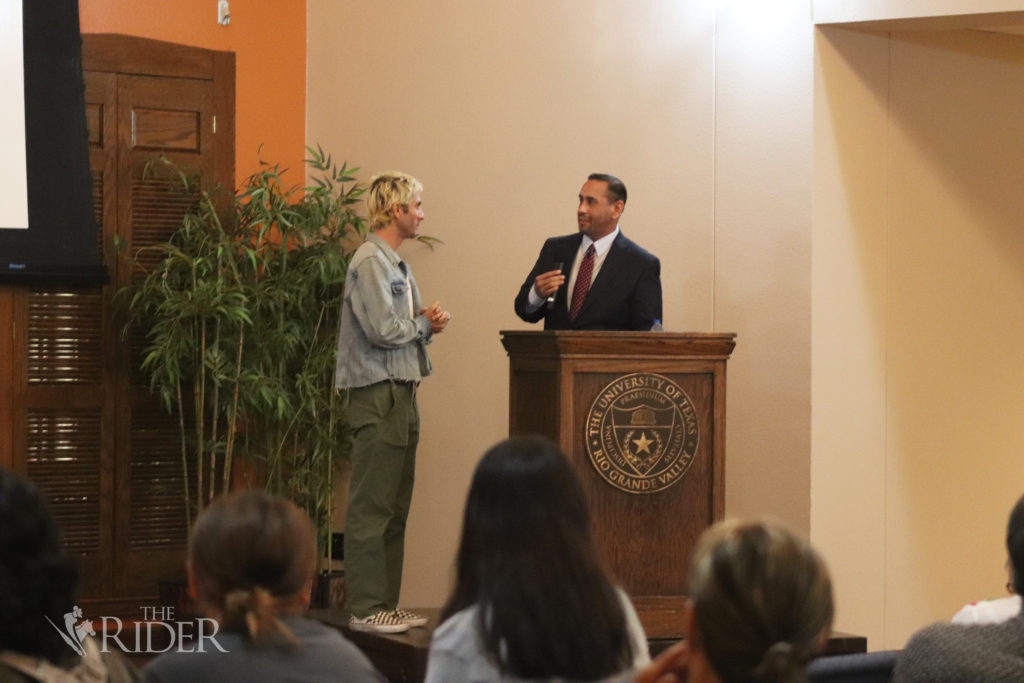
Noel Rodriguez, UTRGV director of the College Assistance Migrant Program, introduced and played Chávez’s documentary.
CAMP is a government-funded program that has been assisting first-year college students with a “migrant seasonal background” for 20 years, according to Rodriguez.
“Since its debut, Eduardo has screened ‘Hailing Caesar,’ and spoken at over 50 universities in three different countries,” Rodriguez said before starting the movie. “We are honored to have Eduardo join us.”
Chávez’s documentary portrayed his journey in learning and connecting to his family history, specifically his paternal grandfather César Chávez, a civil rights activist and co-founder of the National Farmworkers Association.
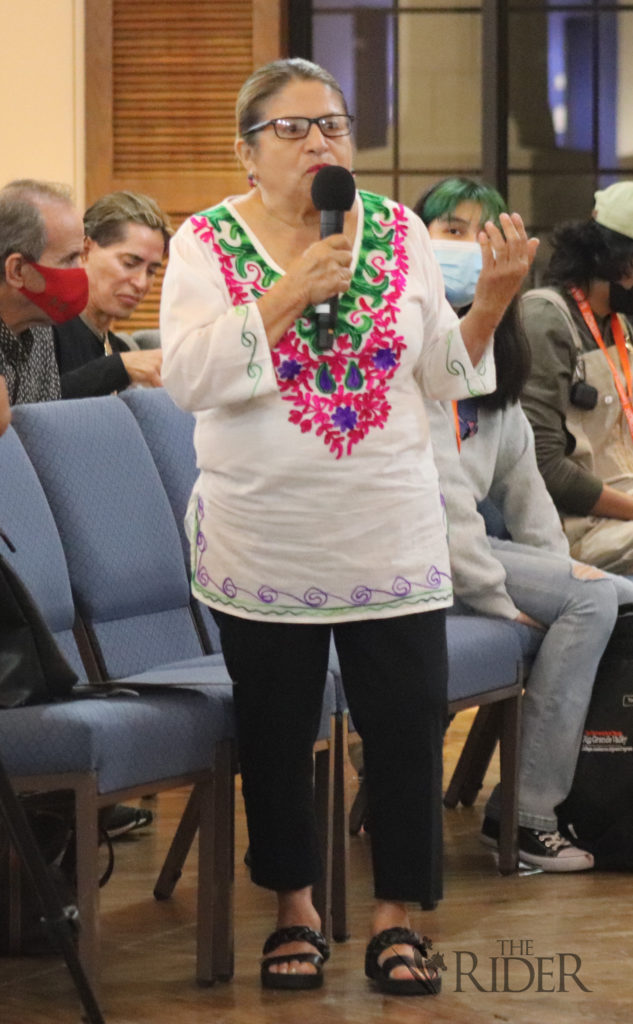
Several guests shared their experiences working in the field during the Q&A portion of the event, including 65-year-old Olga Garcia who came to the U.S. when she was 14.
“I remember crossing the border,” Garcia said in an interview with The Rider after the event. “[My mother] came and talked to people [who were] contracting people to take them up north. And later on, she said, you know, ‘We got us a job.’ I was poor when I lived in Mexico, but coming over here … I felt poorer, because we started from scratch.”
Garcia said she often missed the beginning and end of the school year to work in the fields, making it hard to catch up with classwork.
“People would think you were dumb or something,” she said. “You’d miss the whole [first] six weeks or the last. Sometimes, it was very hard to catch up.
“At the time of my senior year, I told my mom, ‘Mom, I can not go anymore. I want to go to college.’”
Garcia earned a technical degree in data processing from Texas Southmost College so she could work and help her family. She then earned her bachelor’s and master’s degrees while employed in data processing for TSC, where she worked for 32 years before retiring.
The documentary screening and discussion was a reminder to work hard, Garcia said.
Richard Hernandez, who also attended the event, said he marched through Downtown Brownsville to boycott grapes in California.
“Back in 1974/75, César Chávez came here,” Hernandez said. “I must have been 10 years old and we used to pick cotton as well. Then at 15/16 is when I got to meet him. … It was the American Farmworkers and we all marched to downtown.”

