Jose Rodriguez/THE RIDER
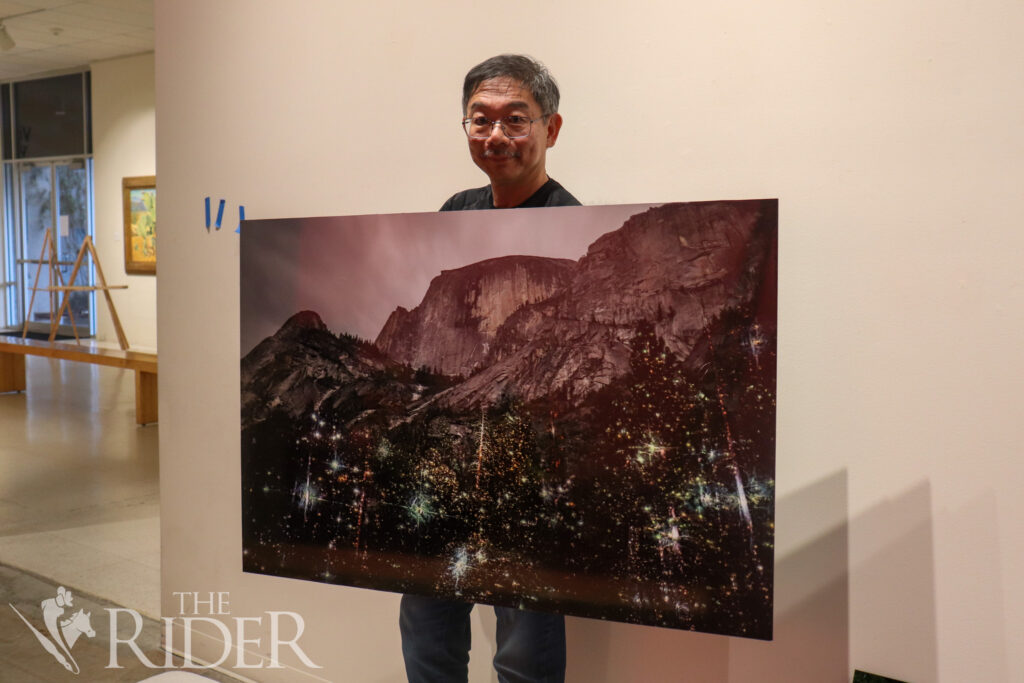
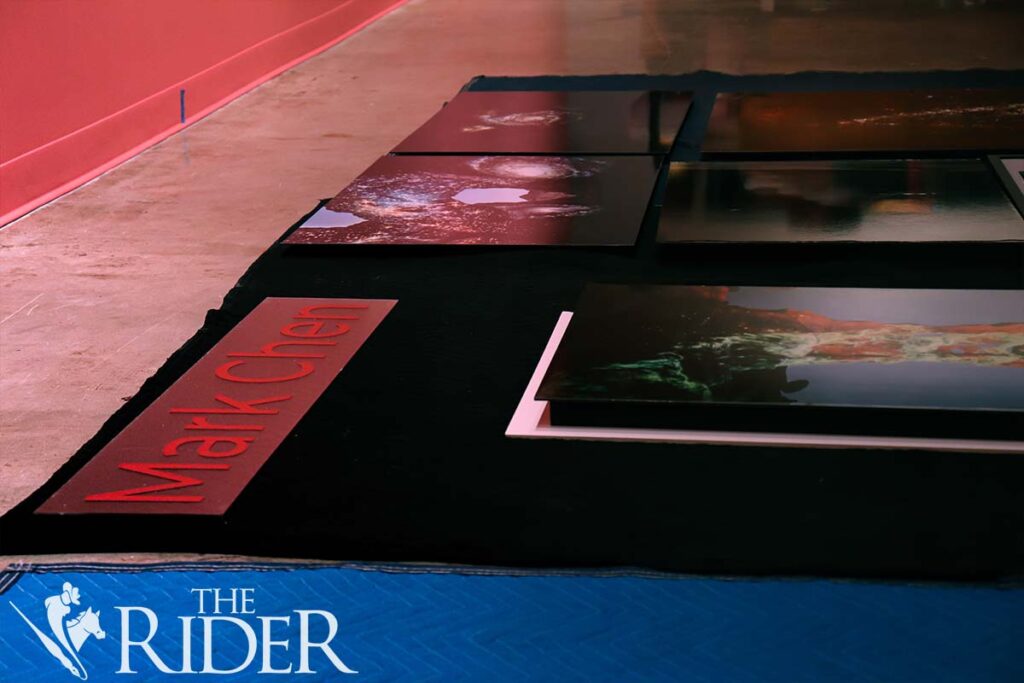
Artist Mark Chen merges the celestial and the terrestrial, projecting images of distant galaxies and nebulae onto rugged landscapes in his exhibition, “Pilgrimage of Light,” transforming earthly geology into a canvas for the cosmos.
The exhibition opens Thursday and will run until Jan. 25, 2026, at the International Museum of Art and Science in McAllen.
Chen is a multimedia artist known for his work that combines photography, science and technology to explore the intersection of art and scientific concepts.
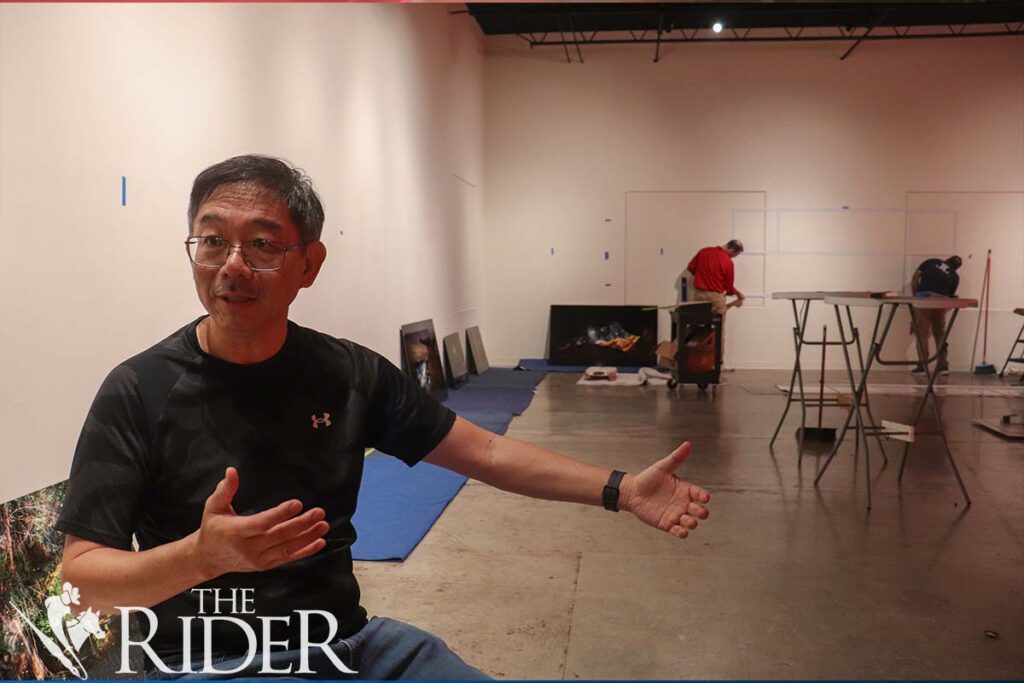
He said his fascination with the stars began with a childhood memory in Taiwan, his home country.

Jose Rodriguez/THE RIDER
In an interview with The Rider, he shared a story of his mother allowing him to select any book from a bookstore, and he gravitated toward one about space, kindling a lifelong curiosity and passion for astronomy.
However, as an adult, he could not formally study the field because it was not offered in Taiwan.
Now, through his art, Chen researches and creates work that bridges the gap between art and science. He joked that the best part is that his scientific work does not need to be peer-reviewed.
His “Pilgrimage of Light” was born from what he called a “failure” to bring stars into a gallery setting.
“[Stars] are beautiful,” Chen said, “but that’s not the work of any artist. It’s the universe’s.”
He added he found inspiration from the work of American photographer John Pfahl, who manipulated landscapes in his work.
This is when he discovered his reason to unite the cosmos and Earth by projecting galactic images onto natural landscapes.
The fusion of imagery is philosophically grounded in two concepts: deep time, the geologic term for the age of the Earth; and lookback time, the astronomical term for the light-year distance of celestial objects.
Jose Rodriguez/THE RIDER
Chen said he found profound connections when these two timescales align, like how the age of the stalactites in Carlsbad Caverns happen to be the same as the distance from the Andromeda Galaxy in light years.
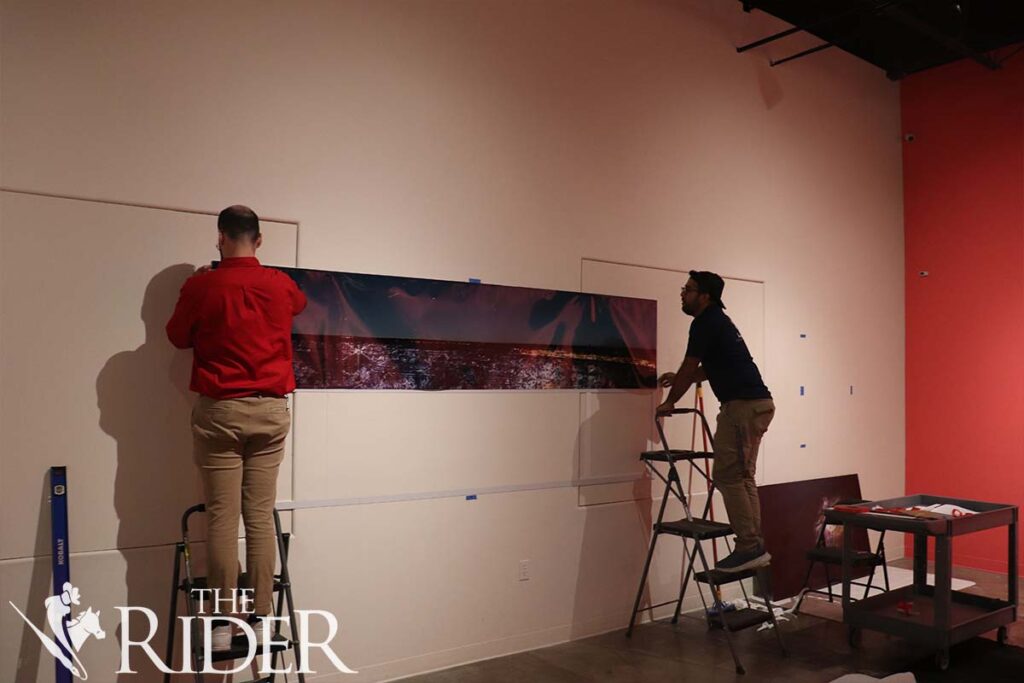
To preserve the conceptual purity of the project as a physical journey, the artist deterred from using digital manipulation, such as Photoshop, and invented his own projector.
The device as he described is a“reverse camera,” which was modified to change the direction of the light and, through slides, projects light from a flash through the lens.
Chen described his invention as a very powerful projector, “not for watching.”
“Our eyes don’t appreciate it; it’s too quick,” he said. “But it’s perfect for photographing.”
The Rider asked the artist if there was a specific trip that felt like a true pilgrimage.
Chen replied his trip to the Bisti Badlands was a uniquely challenging and physical journey. The location had no marked trails, making navigation difficult and requiring him to utilize the app All Trails, keeping his eyes on it at all times.
Surprisingly, he said he found that hiking in the dark was easier since there were no visual landmarks to confuse him.
Jose Rodriguez/THE RIDER
Chen added he also found inspiration in the darkness, which is partially why his series is called “Pilgrimage of Light,” “bringing light into [the] dark.”
“[When I] looked at the stars, sometimes I had this very strange fear, [an] inexplicable kind of fear,” he said. “That, I think, is a fear of smallness.”
Now, Chen said his art has allowed him to overcome that fear, and he feels “at home” in these remote, dark locations and, when he projects the celestial images onto the landscapes, he experiences a sense of place in the universe.
“This is my definition of identity art,” he said.
The opening reception of “Pilgrimage of Light,” will take place at 5 p.m. Sept. 18 in the IMAS, located at 1900 W. Nolana Ave. in McAllen. The event is free for members and $10 for the general public.
Jose Rodriguez/THE RIDER