Valeria Tokun Haga/THE RIDER
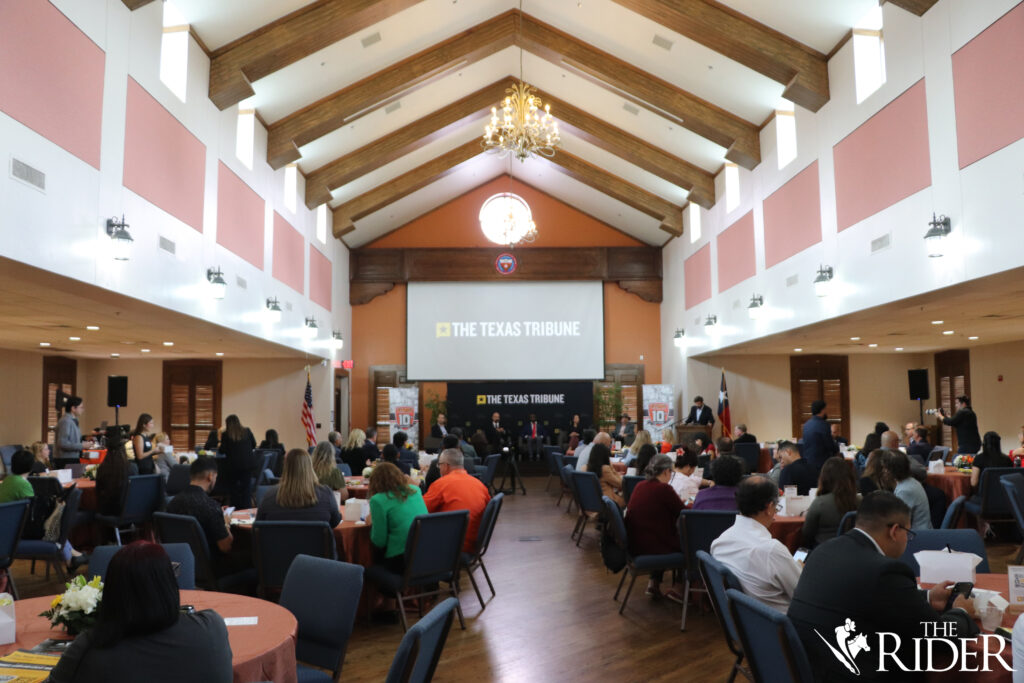
Experts came together in two panels to discuss how the Rio Grande Valley can strengthen its economy and keep more of its young workforce in the region.
The Texas Tribune hosted “Preserving the RGV’s Economic Miracle” Wednesday in Edinburg and “Preparing the Next Generation of RGV Workers” Thursday on the UTRGV Brownsville campus.
“The Texas Tribune is the only member-supported, digital-first, nonpartisan media organization that informs Texans — and engages with them — about public policy, politics, government and statewide issues,” according to its website.
Tribune Editor-in-Chief Matthew Watkins and reporter Bernice Garcia moderated the Edinburg event.
Nick Rhodes, president and CEO of Rhodes Enterprises, said the price of entry-level housing has more than doubled in the last five years.
“In 2019, an entry-level three-bedroom home was about $105,000. Today, that same home is $240,000 to $250,000,” he said. “Buyers who used to qualify with $49,000 in annual income now need closer to $80,000.”
Rhodes added immigration enforcement has also affected the housing market by straining the construction labor pool.
“There are a lot of workers who are nervous to show up at job sites,” he said.

Draya Rios/THE RIDER
Bob Anderson, vice president for supply chain and operations at Alps Alpine North America, said the Valley’s economy cannot be separated from Reynosa, where most of the company’s manufacturing takes place.
“Our production is in Mexico, but our logistics, engineering and technical services are here in McAllen,” Anderson said.
He added tariffs have been “huge” for the company, with about 20% of its products not qualifying for exemptions under the United States-Mexico-Canada Agreement.
“It could have been $70 million in additional costs this year,” Anderson said, though Alps was able to restructure supply chains to avoid most of the impact.
He also described how automation and artificial intelligence are shaping the industry.
“We use AI to simulate production lines and to forecast demand,” Anderson said. “But that means the workforce has to change. We need to move from pawns to chess pieces.”
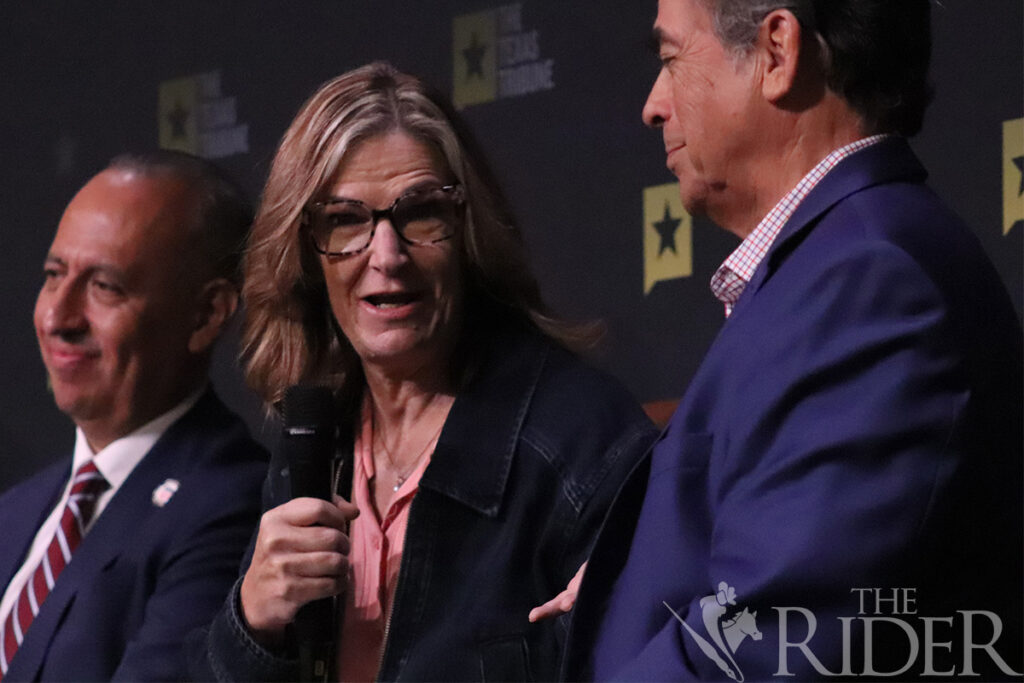
Draya Rios/THE RIDER
The forum also featured Julia Coronado, president of MacroPolicy Perspectives and member of the Dallas Fed’s Academic Advisory Council; Mario Reyna, executive director of Rioplex; and Gilberto Salinas, chief strategy consultant at GilSalinas Ecodevo Concepts and president and CEO of the Greater Brownsville Incentives Corporation.
Coronado said the Valley is seeing a slowdown in key indicators, pointing to tariffs, immigration policy and federal budget cuts as the main drags on the economy.
“Job growth has dropped from 4.2% to 2.6%,” she said. “Unemployment is up to 6.4%, and wage growth has turned negative.”
Garza said despite the headwinds, he sees reasons for optimism.
“Thousands of young people from here are in Houston and Austin,” he said. “They’d move back for the right job.”

Draya Rios/THE RIDER
Reyna added that collaboration among Valley cities is essential.
“If we’re competing against each other, we’re losing,” he said. “We have to present the Valley as one region if we want to attract investment.”
Salinas emphasized the need to prepare for longer-term changes in the job market.
“Health care already makes up 25% of the workforce in the Valley,” he said. “That’s double the national average, and it’s only going to grow.”
In Brownsville, the focus shifted to preparing the next generation of workers. Speakers included Guy Bailey, UTRGV president; Andrea Figueroa Benton, director of community relations for NextDecade Corporation; LJ Francis, State Board of Education District 2 member; and Salinas, who also participated in the Edinburg event. Watkins also moderated.
He said a problem in the Valley is the “most talented students” leaving the region for better educational opportunities and never coming back.
Watkins asked Bailey how keeping students in the Valley has been since UTRGV has been the “most prominent” tool to keep them in the region.
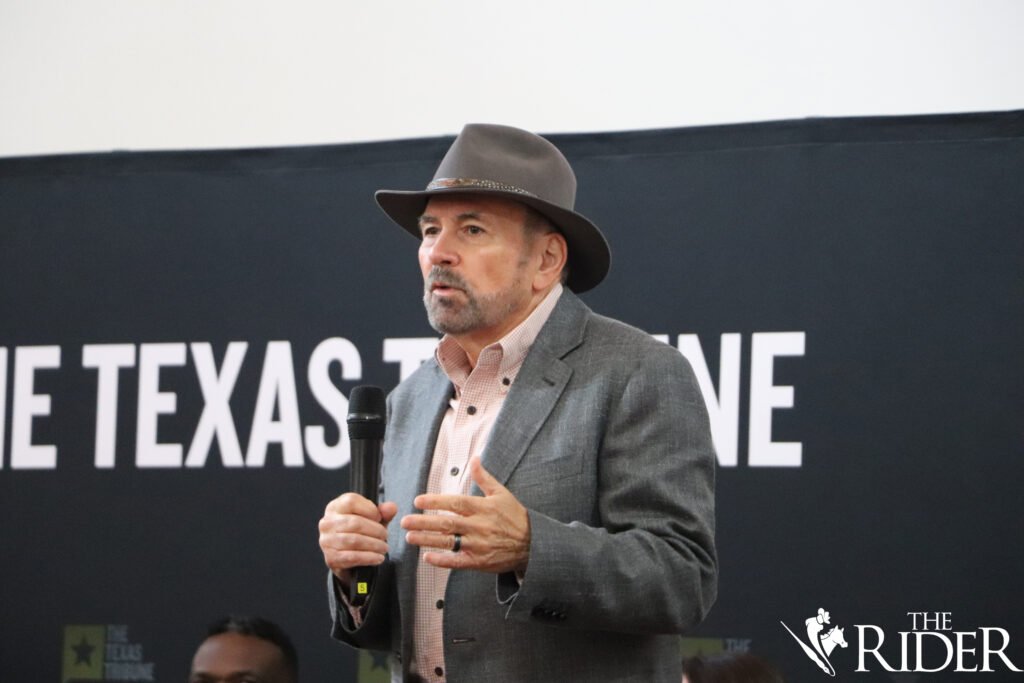
Valeria Tokun Haga/THE RIDER
Bailey replied the university works by offering advanced-degree programs.
“That’s a very important thing, providing the right opportunities and providing the incentives for our best and brightest to stay right here in the Rio Grande Valley,” he said.
Watkins said the No. 1 takeaway he noticed in the region is the “astounding” growth it has seen in the last few decades with Brownsville taking the lead. However, he noted that companies considering relocation often ask how the region can ensure a skilled workforce.
Salinas said, when companies are looking for a specific area, they are driven by geography or incentives, but there has been a “switch” in the last seven to eight years. Now, it is all about the workforce.
Figueroa Benton said Rio Grande LNG has a commitment to the community to have at least 35% local workforce in the project.
“We’re very fortunate to have a very good partner for engineering, procurement and construction, Bechtel, together with NextDecade,” she added.
Figueroa Benton said the NextDecade Corporation has currently more than 4,500 employees and more than 70% of them are local.

Valeria Tokun Haga/THE RIDER