
Jose Rodriguez/THE RIDER
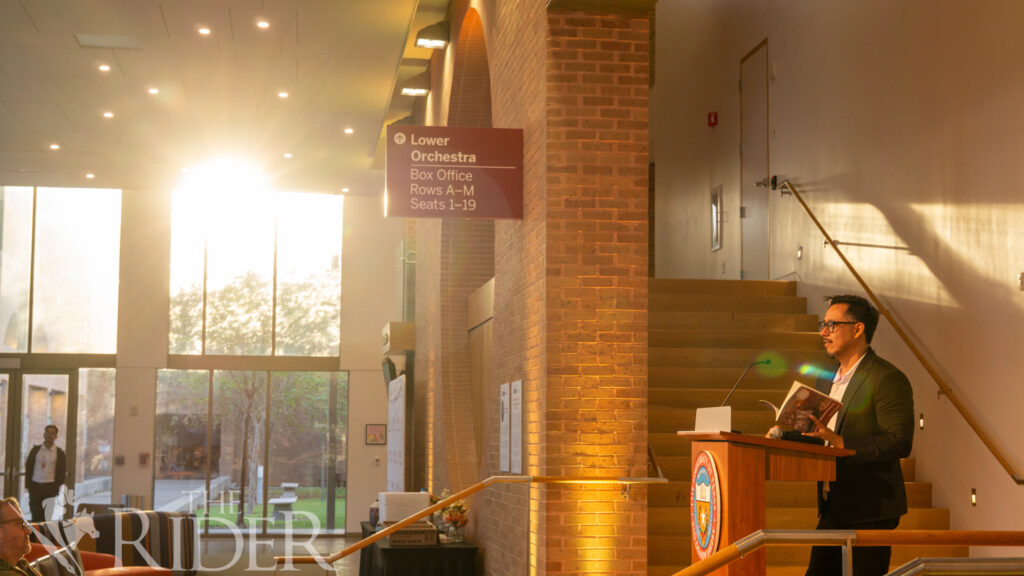
Former San Antonio Poet Laureate and artist Octavio Quintanilla returned to UTRGV, his alma mater, Thursday as part of the Distinguished Artist Series, where he discussed his work and celebrated the opening of his exhibition “Frontextos.”
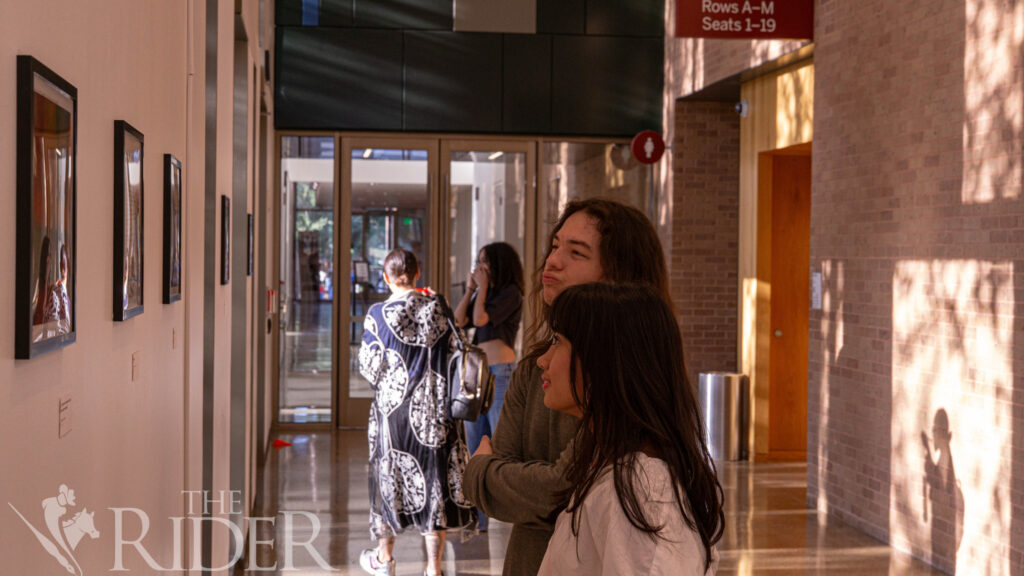
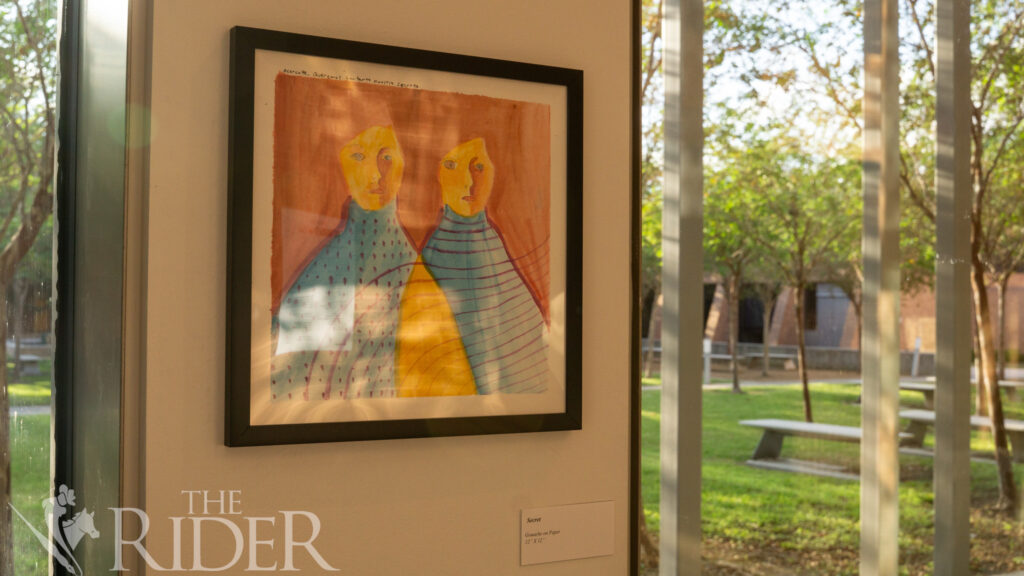
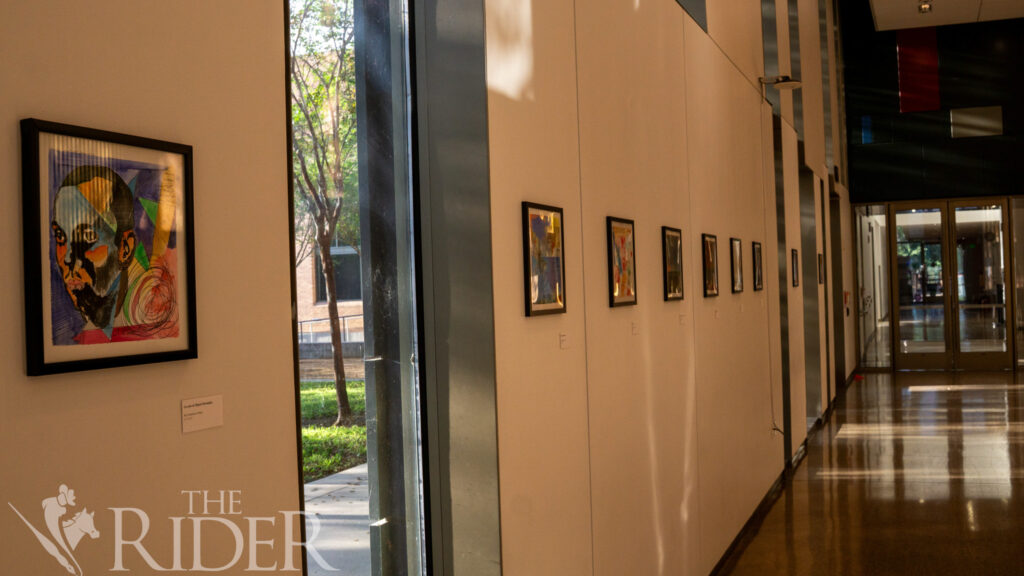
Quintanilla, an alumnus of the University of Texas–Pan American, is exhibiting his unique visual poetry project “Frontextos” through Dec. 22 in the Performing Arts Complex lobby on the Edinburg campus.
“Frontexto” is a term he coined–a portmanteau of the Spanish words frontera (border) and texto (text)–to name this hybrid form and honor his roots.
It is a visual and literary form born from a daily creative challenge, which began in 2018, to create and post one visual poem every day to his Instagram.
“On that day, the frontexto was born,” Quintanilla said to the audience.
He added the name also serves to define the work on his own terms, setting it apart from established forms of visual poetry.
The artist described his work as deeply rooted in “process—process as in explore, apply, synthesize.”
Jose Rodriguez/THE RIDER
The creative process is a way to express emotions and experiences that lie beyond the reach of words alone, forcing him to rely on images and memory, which he sees as a form of abstraction.
“Encounters with abstract art are often emotional for me,” Quintanilla said. “Maybe this is why I paint like some poets write poems.”
While the text in the poems is primarily in Spanish, Quintanilla said his visual language has expanded.
The artist added in many recent frontextos, the text has become “minimal” or has even disappeared, with words becoming “ghosts on the canvas.”
His process often involves painting on large canvases, sometimes leading to what he calls the “process of destruction,” as he regularly paints over older works.
“I kind of enjoy … not just the process of creation, but also the process of destruction when it’s wedded to creation,” Quintanilla said.
This method reduces his “fear of the blank page” by allowing him to see the surface and texture underneath.
Some canvases, he shared with the audience, contain 10 layers of previous paintings.
Jose Rodriguez/THE RIDER
Most of the works on display at the PAC are featured as a secondary text in his poetry collection “The Book of Wounded Sparrows”.
The exhibit expands on the concept by taking the poems off the page and onto the gallery wall.
“It’s kind of like rethinking about what it means to read a book,” Quintanilla said.
The 25 frontextos in his book each feature one line of Spanish poetry.
Quintanilla combined the translated English lines into one long poem, which he read at the talk.
“There are days when sadness feels permanent. Days when I feel alone in your heart’s harvest,” the poem, titled “Prayer for displaced,” reads.
Emmy Perez, chair of the Creative Writing department at UTRGV, said she was inspired to bring Quintanilla to campus as soon as he was named poet laureate.
Perez described Quintanilla as “the perfect example of an ekphrastic poet”—a form where art is written in response to visual work, or vice versa, creating an interplay between words and images.
Quintanilla dedicated his talk to his mother, who was unable to attend, and invited the audience to continue following his daily artistic journey on Instagram @writeroctavioquintanilla.
“These frontextos want to be seen, they want to be read and they want to be experienced,” he said.
Jose Rodriguez/THE RIDER
About The Author