
Draya Rios/THE RIDER
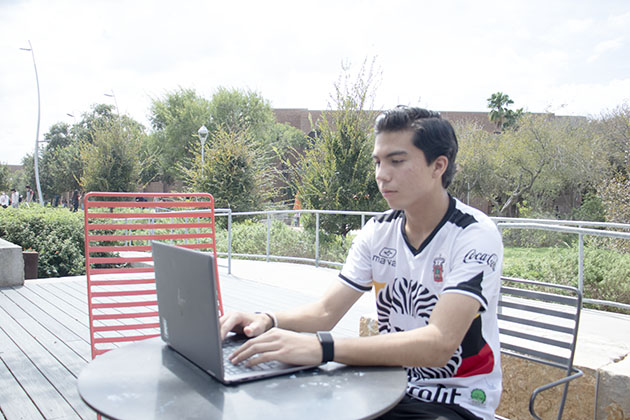
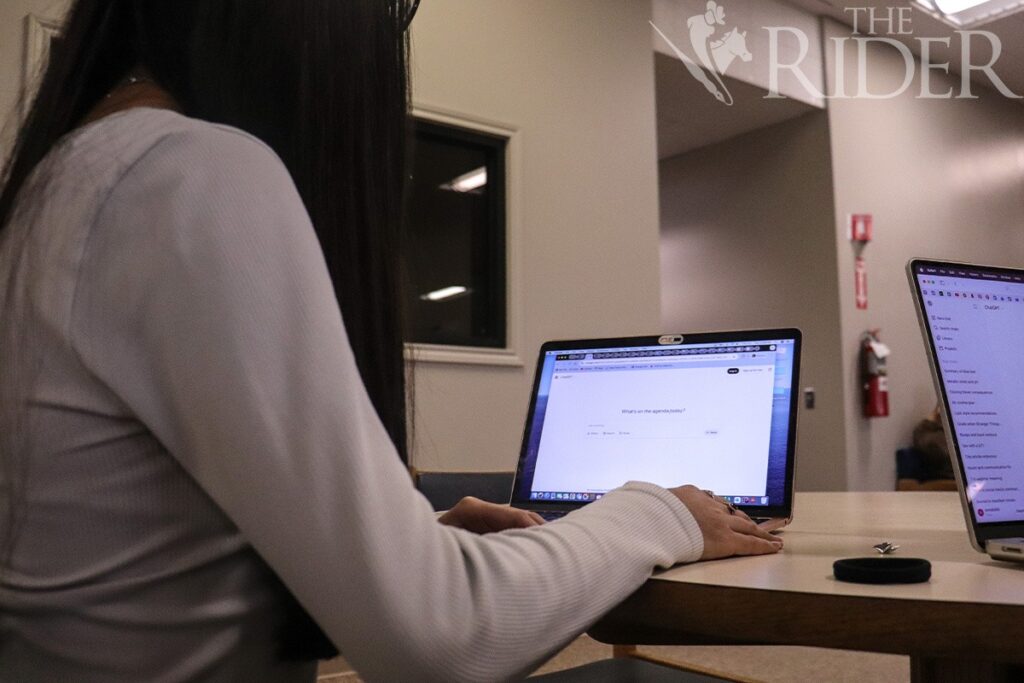
Some students voiced their concerns over being flagged for the use of artificial intelligence as the university does not have specific rules about its use unless specified by departments.
UTRGV is currently working on implementing policies regarding AI that will help students and faculty, according to the Center for Online Learning and Teaching Technology staff.
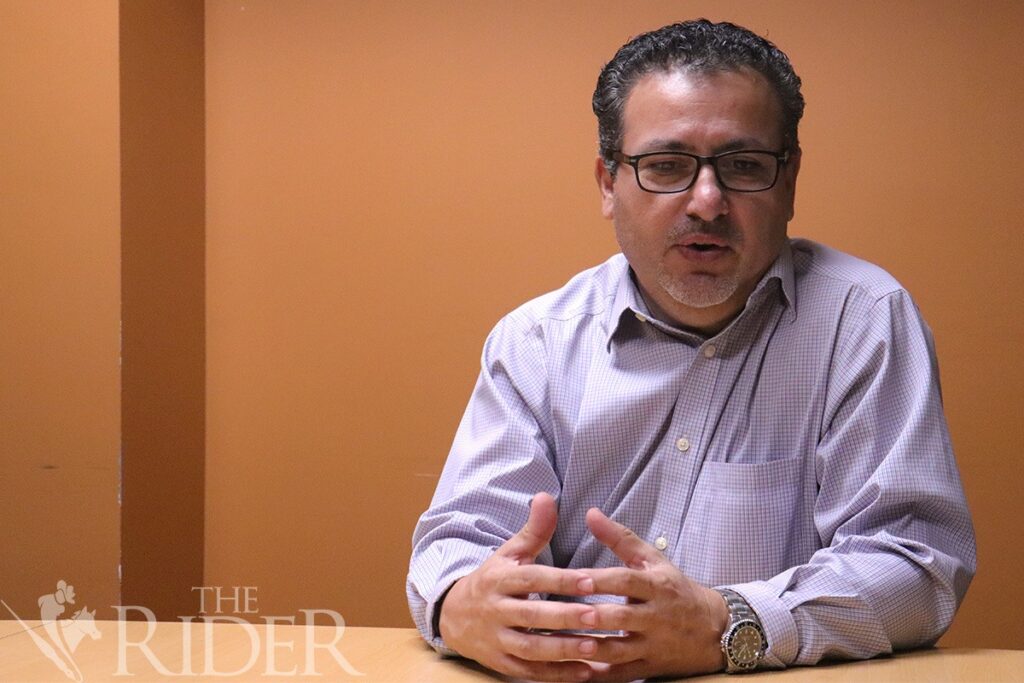
“Academic Affairs is working on guidelines, processes and things like that that will help faculty and students on the implementation of AI,” said Francisco Garcia, COLTT director.
There is technology that can help faculty identify the use of AI although it is not 100% accurate in terms of AI detection because no technology is completely accurate, Garcia added.
Paola Solis, an education junior, said she has seen some students be accused unfairly of using AI by faculty that may be using AI checkers, which she added can be unreliable.
Amaris Gomez, a biology junior, said she was accused of using AI for a research paper during a lab class even though everyone was given the same research paper to base the discussion off of.
“The sentence that I got flagged was something along the lines of, ‘The research was conducted from like this time to this time,’” Gomez said. “… How many other ways can I rephrase that?”
She added the professor spoke to her aside and told her she could tell it was written by AI because of her experience.
Draya Rios/THE RIDER
Students can find rules about AI on their syllabi as it depends on faculty whether they allow or not the use of AI, according to Garcia.
UTRGV’s Handbook of Operating Procedures’ STU 02-100: Student Conduct and Discipline requires faculty to report prohibited use of AI because it falls under academic dishonesty, giving faculty the choice of direct referral to Students Rights and Responsibilities or faculty disposition.
“Transparency should be there from faculty, what can be done and what cannot be done in assignments and in other work for classes,” Garcia said.
Lisa Casarez, a communication lecturer, said she does not have specific rules about the use of AI for her classes.
“I know those tools are out there for students, and so I just remind them it is a tool,” Casarez said. “It’s there to help them, not do the work for them.”
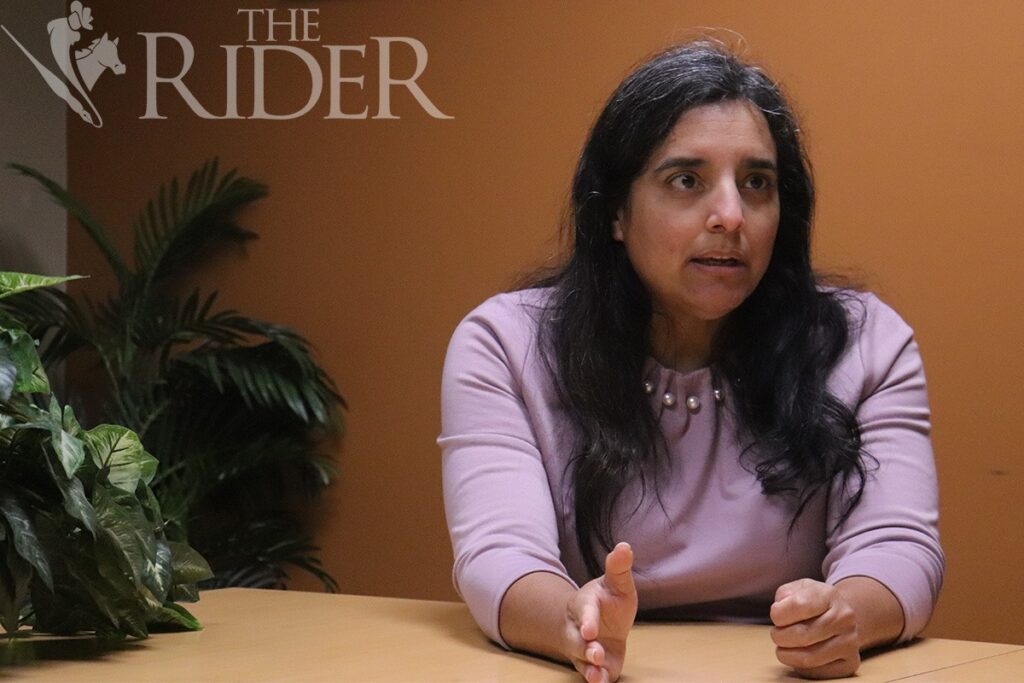
Jessica Sanchez, associate director for COLTT, said students need to know how to use AI responsibly, ethically and efficiently because the job market wants people that know how to use it well.
“Policies is one thing, but there also has to be conversations within the classroom,” Sanchez said. “… It’s not about, ‘I caught you.’ It’s about educating and informing and learning.”
Garcia said he recommends to faculty, staff and students to “not let AI make the decision” for them.
Draya Rios/THE RIDER