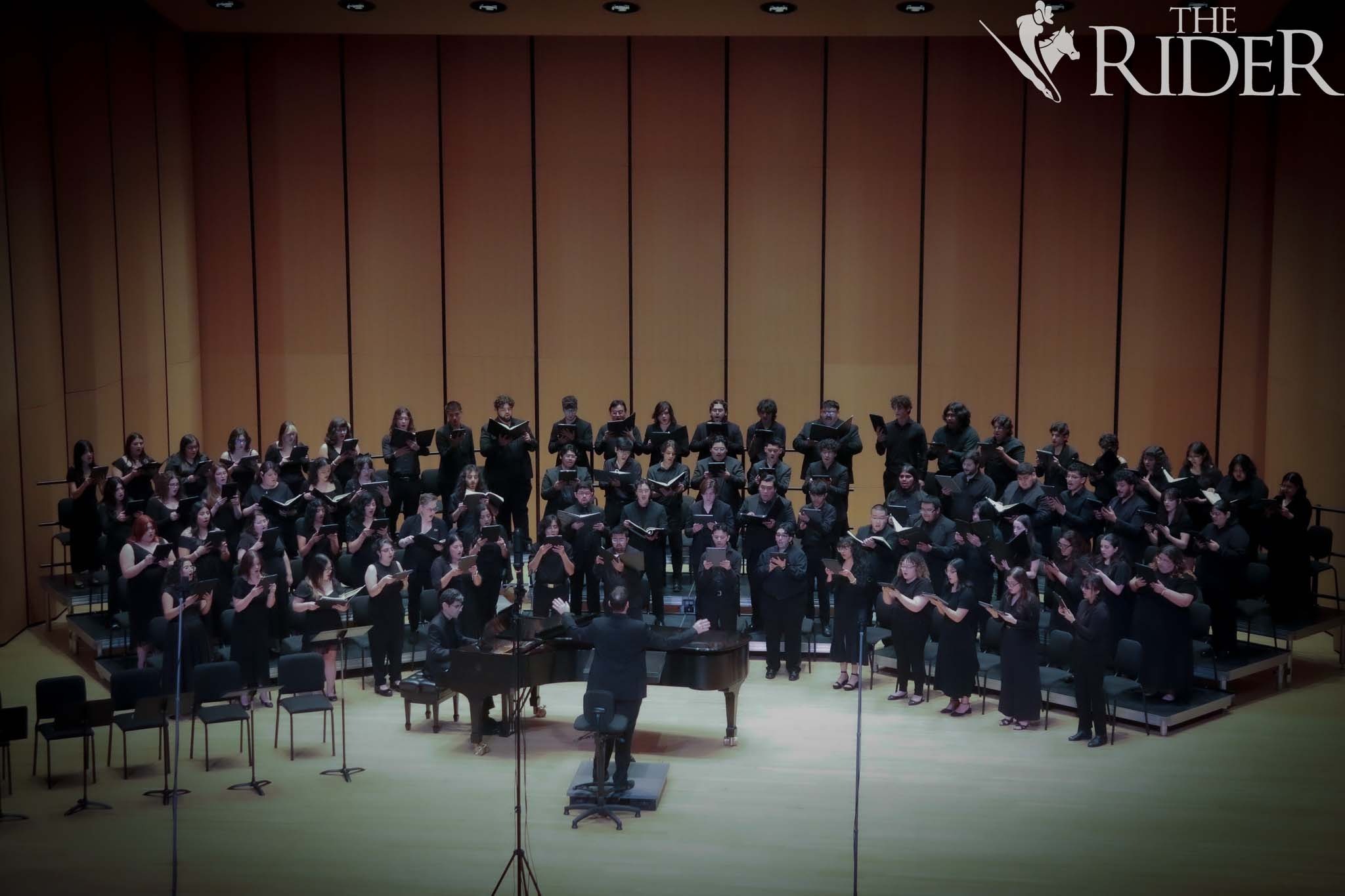
Aarykah Navarro/ THE RIDER
UTRGV’s University Choir and Master Chorale recently undertook the significant challenge of performing Felix Mendelssohn’s 1846 oratorio, “Elijah.” Although the work is grounded in the mid-19th-century revival of the Baroque tradition, its recent performance resonated as a timely commentary rather than a mere historical artifact.
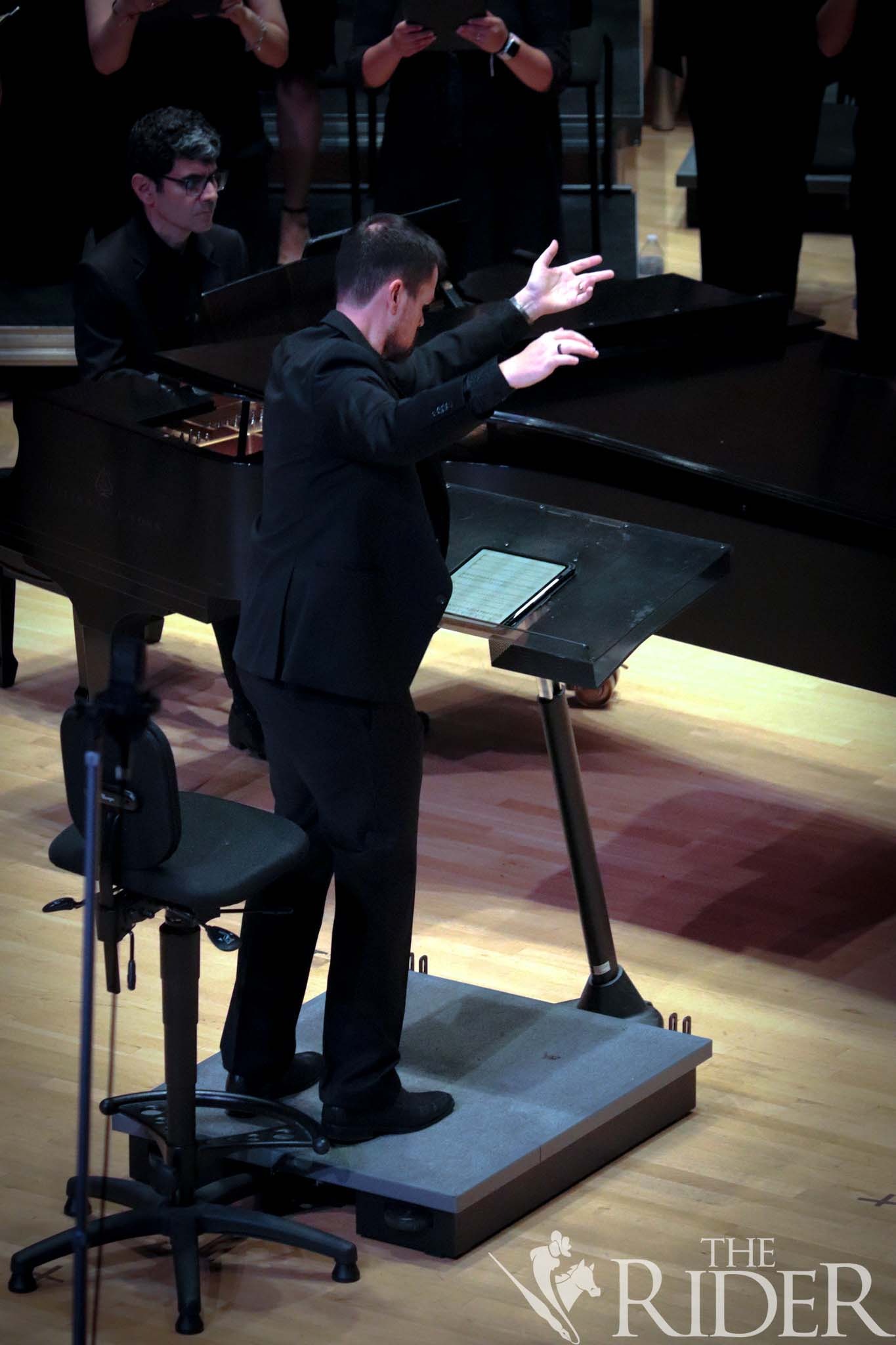
The April 25 performance was conducted by assistant professor Matthew Coffey and associate professor Sean Taylor, with professor Juan Pablo Andrade serving as pianist.
Featured soloists included professor Rebecca Coberly, part-time lecturer Samanthan Luna, soprano Diane Walters, assistant professor Shayna Isaacs, part-time lecturer Casey Joiner-Isaacs, tenor Ricardo Diaz-Garcia and professor Daniel Hunter-Holly.
The performance also featured guest high school treble singers from throughout the Rio Grande Valley.
The oratorio follows the Old Testament prophet Elijah, a figure defined by his uncompromising and often isolated devotion to truth, according to the show’s program.
From his prophecy of a devastating drought to his cinematic showdown with the prophets of Baal on Mount Carmel, Elijah is a man standing against the current of a society that has traded its moral compass for the convenience of false idols.
Experiencing a live choir can be transcendent, the collective voices create an immersive and powerful auditory experience for the audience.
At the beginning of the production, the pianists established a turbulent atmosphere. Their playing was characterized by dynamic and forceful articulation on the Steinway piano.
Choral ensembles have historically exerted a subtle yet significant influence on mainstream music.
Examples such as Pink Floyd’s incorporation of a youth choir in “Another Brick in the Wall” and Rosalía’s collaboration with the Escolania de Montserrat in her 2025 album, “Lux,” demonstrate the collective human voice remains a fundamental means of expressing both the sacred and the urgent.
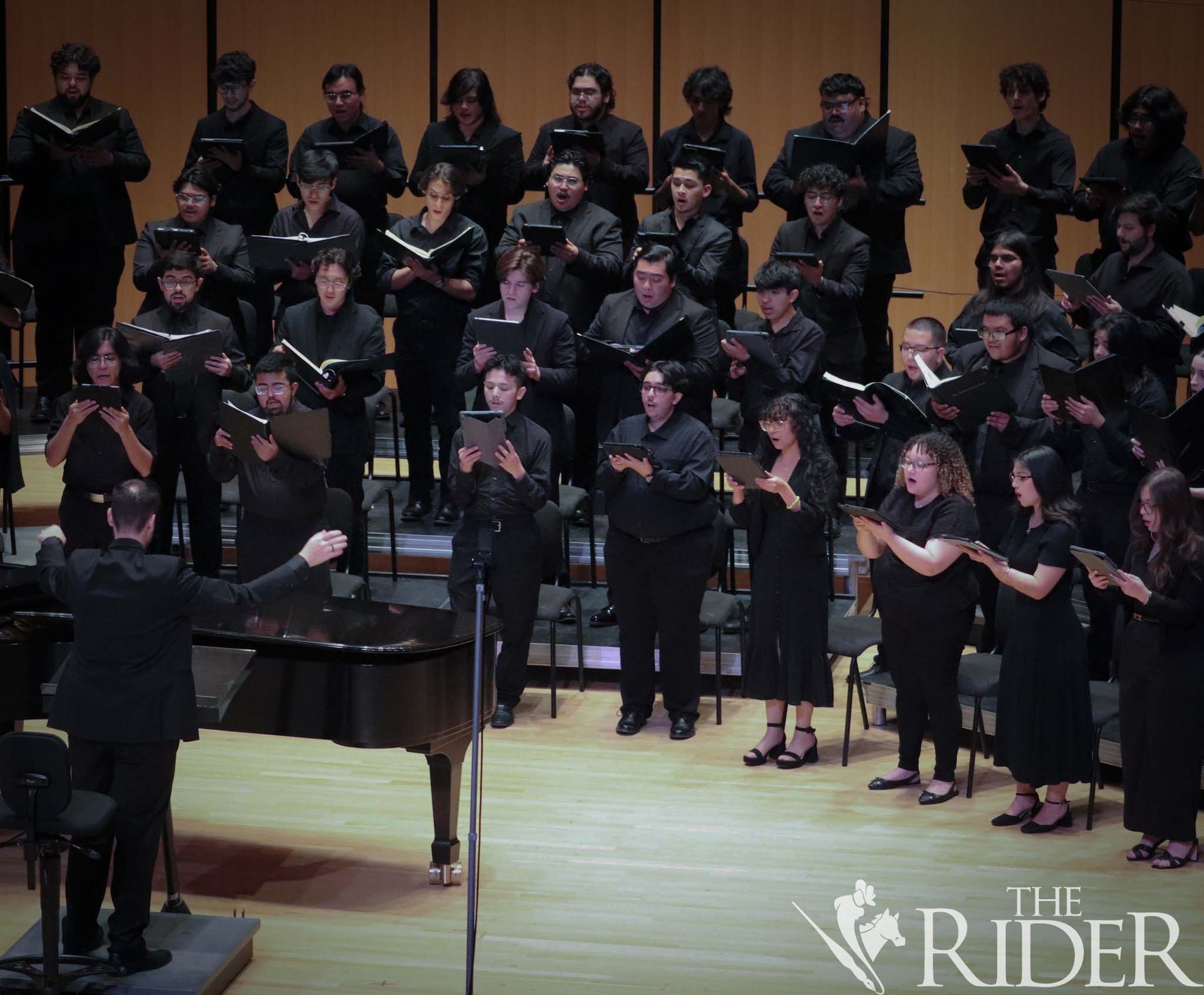
During the UTRGV performance, the choir’s vocal technique enabled their voices to project with remarkable flexibility, enveloping the audience in a resonant and immersive soundscape.
To fully comprehend the oratorio’s central themes, it is necessary to examine the character at its core.
Aarykah Navarro/ THE RIDER
Aarykah Navarro/ THE RIDER
Elijah does not conform to the archetype of a conventional hero; rather, he functions as a disruptor. In contemporary terms, Elijah symbolizes the solitary voice that challenges prevailing narratives within digital echo chambers.
Whereas the prophets of Baal once embodied the state-sanctioned trends of ancient Israel, their modern counterparts can be identified in the phenomenon of the cult of personality.
For secular audiences, the false idols referenced in the Old Testament may be interpreted as analogous to contemporary icons such as Western celebrities, political figures and the idealized representations prevalent on social media.
We witness a society that iconoclastically tears down old truths to worship at the altar of the viral and the influential.
Elijah’s internal struggle, then, is the struggle of the whistleblower. He observes the consequences of uncritical idolization and recognizes the resulting spiritual and social deprivation, which leaves a culture lacking empathy and depth.
The oratorio’s message is particularly resonant as a form of social commentary.
When the choir intensifies to portray the fervor of Baal’s followers, the performance evokes the formidable momentum characteristic of collective movements.
Mendelssohn effectively conveys the disorder of a society that has lost its direction, thereby heightening the impact of Elijah’s eventual quiet resolve.
At the performance’s climax, Elijah’s ascent to heaven in a whirlwind underscored the notion that the pursuit of absolute truth is frequently an isolated and challenging endeavor.
UTRGV’s ensembles did more than narrate a story; they critically examined the underlying values and objects of reverence in contemporary society.
The absolute truth and virtue that Elijah pursued remain as elusive and essential today as they were in 1846.