
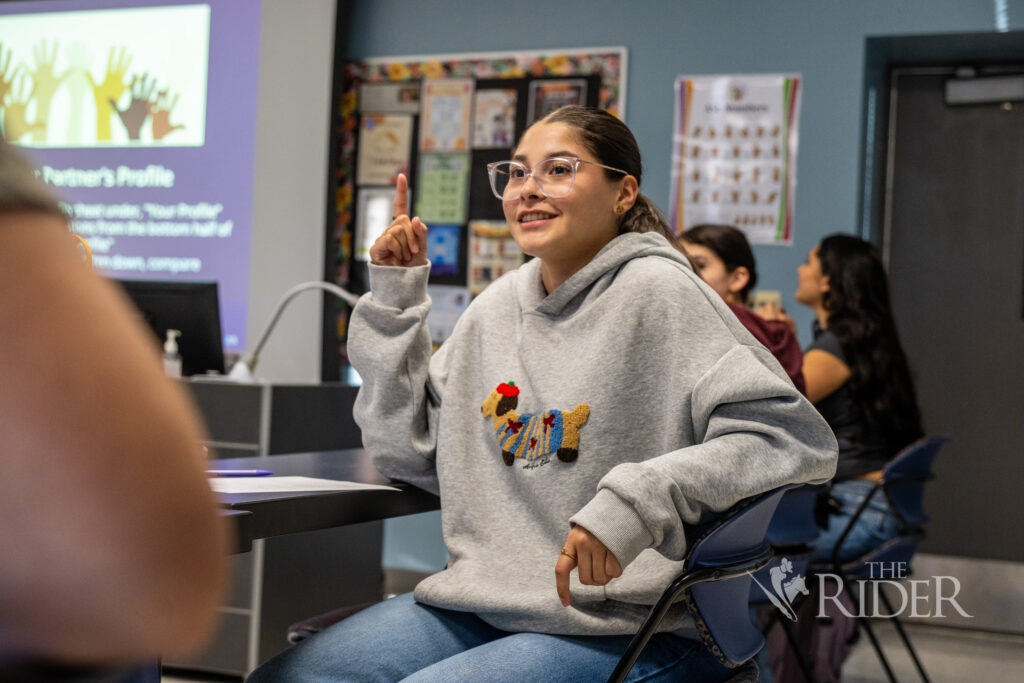
Adrian Hernandez/THE RIDER
A shortage of sign language interpreters in the Rio Grande Valley is creating barriers for deaf residents seeking education, healthcare and employment, according to local American Sign Language educators and interpreters.
Eric Cardenas, a lecturer in American Sign Language & Interpreting and a Deaf professional interpreter, said the Rio Grande Valley’s growing deaf population and limited resources have made the shortage critical.
The shortage is particularly severe for trilingual interpreters who can interpret between American Sign Language, English and Spanish, Cardenas said.
To illustrate the shortage, he estimated there is approximately around one interpreter for every 200 to 300 members of the deaf community.
Cardenas said the shortage jeopardizes the quality of school and healthcare appointments when qualified interpreters are unavailable.
“Often with appointments or meetings, if the interpreter doesn’t show up or there’s not a qualified interpreter, it tends to force a rescheduling … [with] schools … schedules delayed … for months,” he said.
Although schools try to provide interpreters, they sometimes rely on paraprofessionals who lack the qualifications to fill the role, Cardenas said.
Elizabeth Olatunbosun, an ASLI lecturer and interpreter, said the shortage affects schools and hospitals, while deaf people also face barriers when seeking employment.
Olatunbosun said hiring can also be a challenge for deaf people, noting a family member of hers who was deaf and applied for a job where the manager said, “You’re deaf? You can’t hear. You won’t be able to work here.”
She added the discrimination may stem from misconceptions that “ it’s too much of a hassle to deal with a deaf worker,” dismissing how capable many deaf individuals are in the workforce.
Cardenas said one factor contributing to the shortage is the limited number of people who continue their ASL education and pursue interpreter qualifications.
“I always encourage interpreters in the community … to go back to school … get your degree, [get] more … training,” Cardenas said.
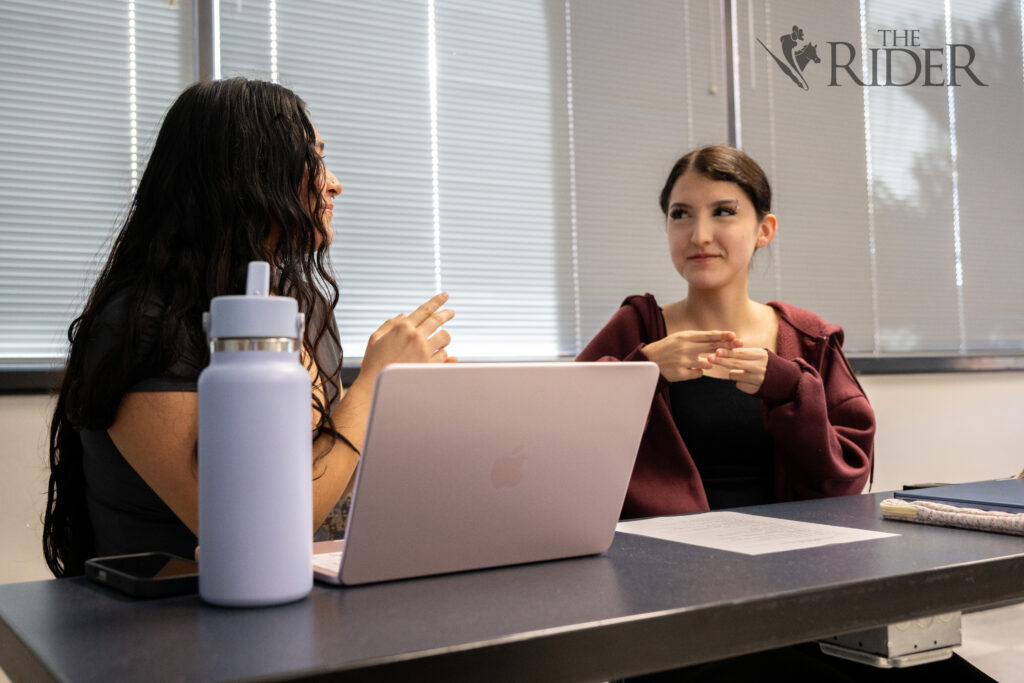
Adrian Hernandez/THE RIDER
UTRGV offers a bachelor’s degree and a minor in ASL. Some programs, including rehabilitation and counseling and communication sciences and disorders, require students to minor in ASL, according to Rosemary Sue Linan, ASL lecturer and interpreter.
Linan said enrollment for ASL programs has increased.
However, Cardenas said an ASL minor provides a limited training than a bachelor’s degree, which can better prepare students for interpreter positions. He added some students who minor in ASL do not pursue careers in the field.
Linan said ASL students can pursue careers in several fields, such as customer support, law and medicine.
The demand for interpreters also creates employment opportunities for graduates, Linan said.
“Yeah, … the demand is incredibly high … we have one student right now who has yet to graduate … and she’s already working … as an interpreter,” Linan said.
Cardenas estimated interpreter rates range from $30 to $40 an hour, with specialized legal and medical interpreters sometimes earning $50 or more. However, he said pay varies depending on specialization, experience and qualifications.
Olatunbosun said while job and financial prospects are desirable, a genuine interest is another crucial aspect when pursuing the field.
“Interperting does pay well. But, … you can always tell when people are in it just for the money,” she said. “It’s really important we educate students on both parts.”
Cardenas said many students who enroll in ASL programs have deaf family members and want to improve communication. He encouraged more students without those family connections to consider the field.
Olatunbosun said high schools could help address the shortage by informing students about ASL programs and career opportunities.
Beyond education and employment, Cardenas said the deaf community continues to face barriers to inclusion in broader social and professional systems.
“We haven’t really collaborated with the hearing world, [on] a political level … competitive level … job opportunities … there [are] always barriers being put up,” Cardenas said. “I’ve been to several, several different countries and it’s been the same everywhere I go.”
He said these barriers can leave deaf people isolated from the hearing community.
“Don’t be afraid to stand up and serve with the deaf community,” Cardenas said. “We are always open. We appreciate all of you and we hope to see more … students come out.”
For more information about the program, visit facebook.com/utrgvasli.
About The Author