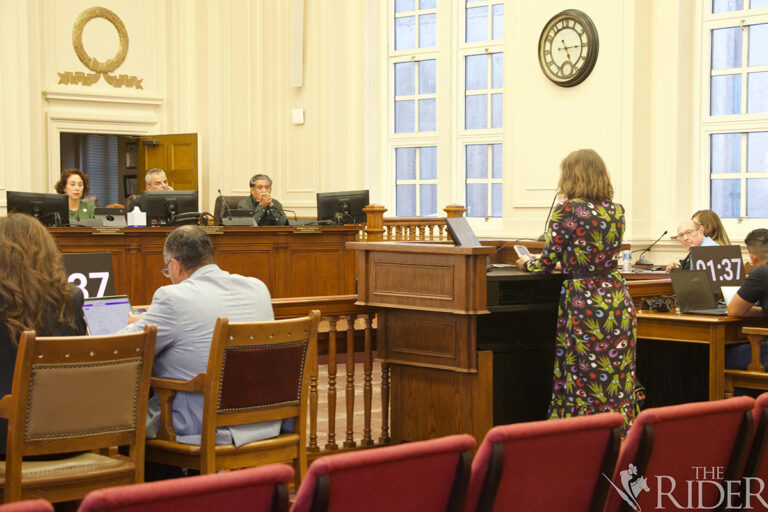


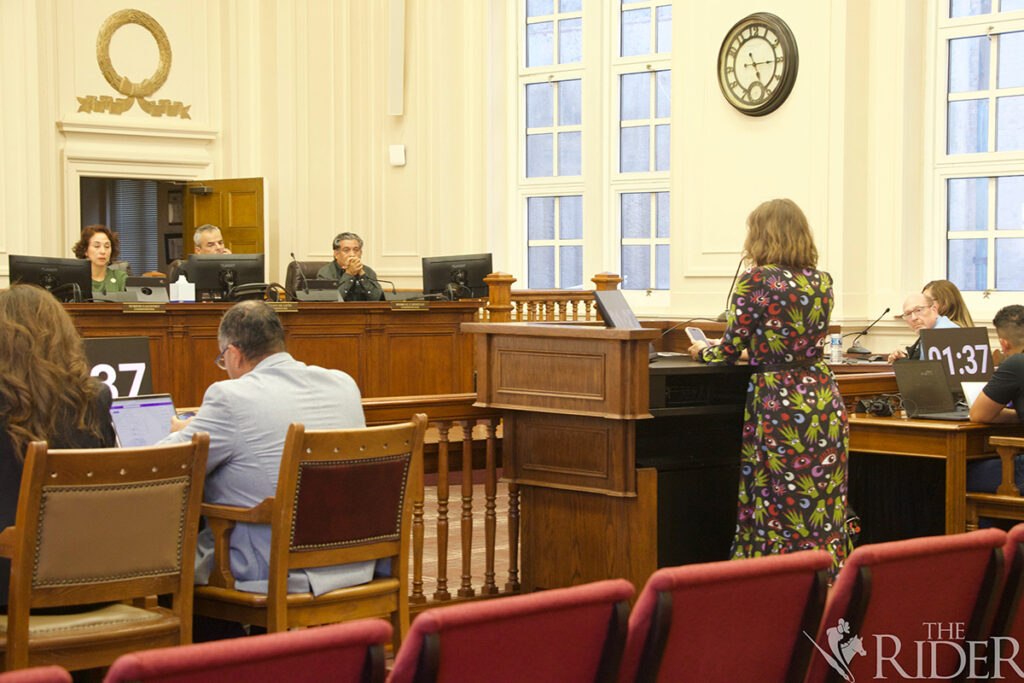
Gael Espinoza/THE RIDER
The Brownsville City Commission unanimously approved the final reading of a 90-day moratorium on artificial intelligence data centers during a special meeting Wednesday at City Hall. The moratorium took effect Thursday.
As The Rider reported on Oct. 12, city officials had previously discussed the possibility of extending the moratorium for another 90. An extension is expected to be discussed Jan. 19, followed by a second and final reading Feb. 2. If extended, the moratorium would expire May 18.
Fourteen residents signed up to speak during the public hearing. Among them was Dr. Christopher Basaldu, a resident and co-founder of South Texas Environmental Justice Network, who said the city should consider a permanent ban on AI data centers.
John Cuvillier, a Brownsville resident and co-chair of the Democratic Socialists of America Rio Grande Valley ¡Fuera Data Centers! campaign, said he feels accomplished following the commission’s decision.
“This was a people’s victory,” Cuvillier said. “The city might try to claim it as their own, but that’s not true. The people are the ones that showed up week after week, month after month, to make sure that this moratorium passed, and that we established a task force, a community-led task force, meant to work with the community to develop regulations for data centers.”
Etienne Rosas, a Brownsville resident and member of the city’s Environmental and Conservation Task Force, described the moratorium as “better late than never” and said thinks the moratorium is the first step toward further action.
“I think the moratorium is just the first step that we need to take in order to do a broader analysis of how these projects impact the quality of life of Brownsville residents,” Rosas said. “This was something that was hard-fought by the community.”
Linda C. Macias, District 2 city commissioner, said the commission hopes to learn more about data centers and determine the appropriate moving forward.
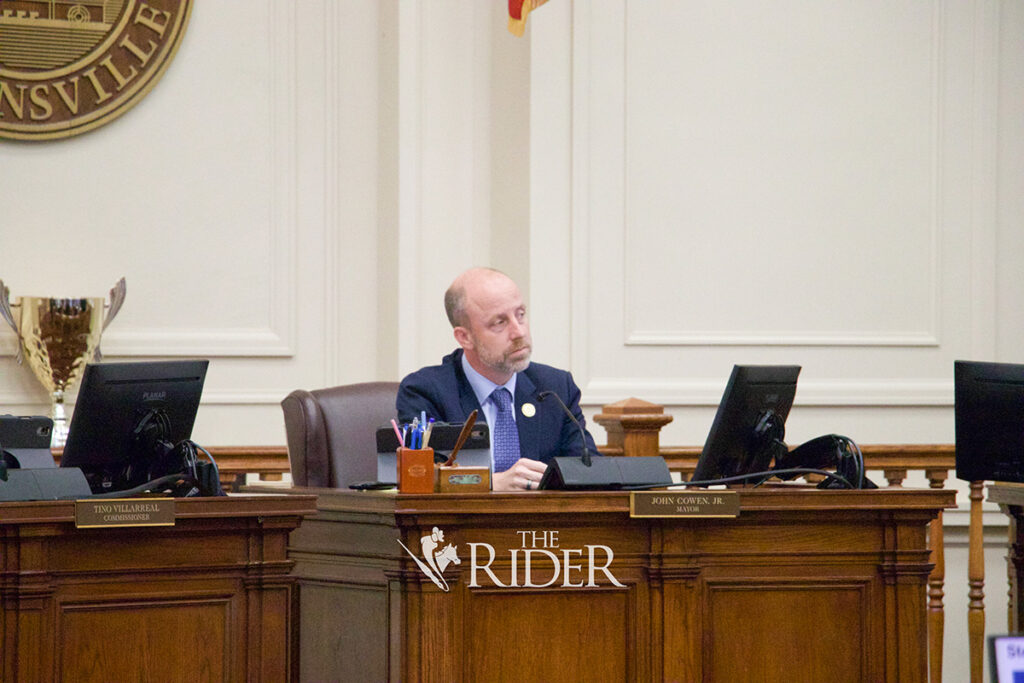
Gael Espinoza/THE RIDER
“Our hope is to, one, learn more about it, two, learn what we can do about it,” Macias said. “We have implemented an environmental task force where each City Commissioner appointed a community member that’s passionate about the environment and individuals who have experience as well. We’re hoping that through their conversations, we can also learn more. We’re also taking community conversations and comments seriously.”
However, the moratorium does not affect the 444 acres of land the city disannexed to SpaceX, which has been a concern among some residents.
In a Nov. 5 Facebook post, At-Large A City Commissioner Tino Villarreal addressed residents’ criticism of the decision.
“Before this moratorium, any property already zoned Heavy Industrial could have started building a data center through regular permitting process without needing to come before the City Commission for a Specific Use Permit,” Villarreal wrote. “The recently deannexed property (444 acres) behind our city landfill is a perfect example… I understand the criticism and concerns surrounding that decision… but there is an important fact that gets overlooked: that property was zoned Heavy Industrial. So even before deannexation, a data center proposed on the Heavy Industrial portion would not have required City Commission approval. Our City Attorney publicly clarified this during our previous hearings.”
Villarreal and Macias said the commission will continue working with the Environmental and Conservation Task Force to research AI data centers.
Macias said the commission is fighting for their residents.
“I think that this is a really positive thing for the city of Brownsville,” she said. “We are continuously working with all residents and all citizens. We want to let them know that we are by their side. We are fighting for them. We are with them, and we will continue doing what is best for Brownsville.”
Rosas said the task force will base its findings on research, recommendations and available data.
“The Environmental Task Force is going to conduct its analysis based on a lot of recommendations from different cases but also on the data and the facts on the ground,” he said. “We will carry out that assessment as we go along, and I believe it probably will lead us to the conclusion that data centers should be banned in Brownsville.”
Cuvillier said residents should stand up for what they believe in and make their voices heard.
“I believe a better world is possible, but only if we organize,” he said. “I implore folks who aren’t already a part of an organization to join an organization, join DSA, join their union, and get involved in the community. Bring their coworkers together, their friends, their family, and come together around things that we have in common so we can make the world better.”
Residents can attend Environmental and Conservation Task Force meetings to learn more about AI data centers. The next meeting is scheduled for Monday at 6 p.m. at the Brownsville Events Center, 1 Events Center Blvd.
About The Author