

When I started college as a freshman, I was very excited about my major. I have always loved theater and film. I have been part of many plays, and I can watch movies again and again without getting tired.
I thought studying something I love would be fun and easy. But I was wrong, my classes take almost all my time. Between readings, scripts and projects, I barely have time to watch a movie a month. What used to be my safe place has sometimes become a storm. Still, I stayed motivated by the idea of meeting new people, making connections and being part of a creative community.
Two years have passed and, little by little, I’m starting to find my place. But I can’t ignore that this field is still dominated by men. Many times, I have felt intimidated or even ignored by my male classmates.
It’s frustrating when women’s ideas are not taken seriously. Sometimes, I feel lost without feminine energy around me to inspire me and keep me going. I feel like my voice is slowly disappearing. I never thought being part of this field would be so complicated.
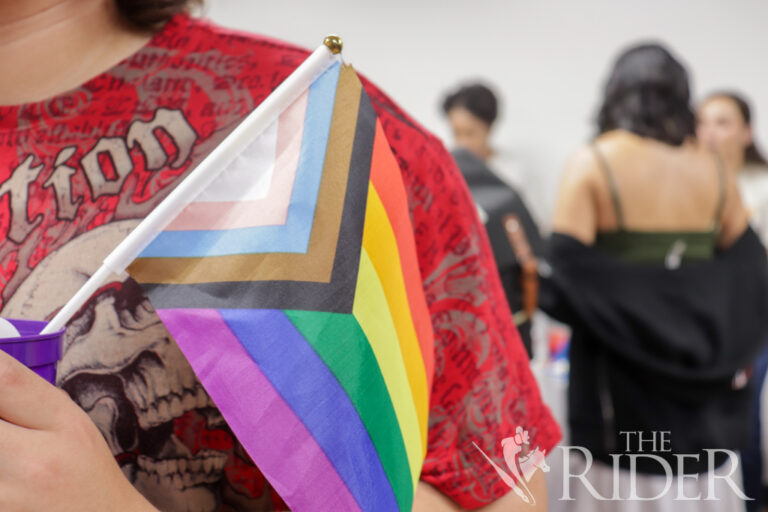
Sometimes I even wonder if things would be easier if I were a man. Am I under this game of oppression just for being a woman? I am proudly Mexican, born in Mexico and part of the LGBT community, and finding my place here has been hard.
But then, I found Latino Theatre Initiatives, and it gave me a true sense of belonging. There, I found people who share my love for theater, my roots and my desire to tell stories from a Latina and a woman’s perspective.
I would love to see more women in theater and film, not only in front of the camera, but behind it too–writing, directing and creating. We need more role models to help us keep going, especially when doubts come and I ask myself if I made the right choice.
Even with all its challenges, I still find purpose in art. Watching a movie or a play, even when I don’t have much free time, reminds me of why I chose this path: Art helps me feel, understand and connect.
Maybe the real challenge is not just to survive in this difficult artistic world, but to change it from the inside so that more voices, especially women and Latino voices, can be heard.
About The Author