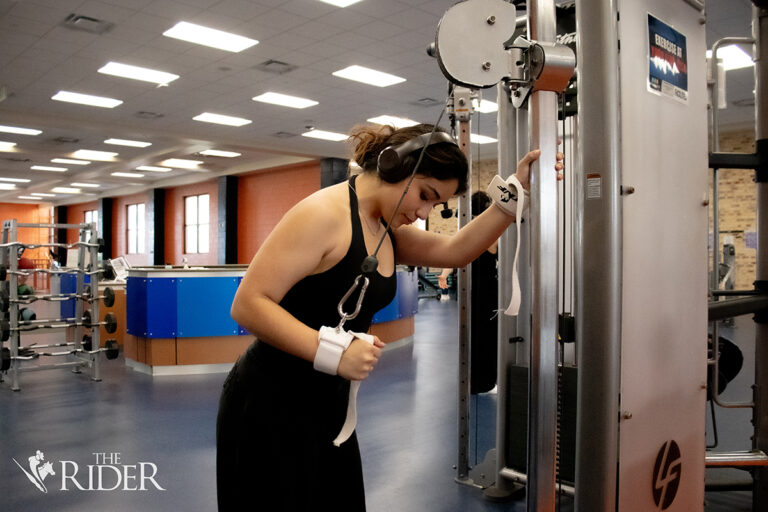
SGA pushes new campus measures

Valeria Tokun Haga/THE RIDER PHOTO ILLUSTRATION
The Student Government Association is in talks to approve two resolutions—the Syllabus Transparency Act and the Life and Overdose Prevention Act—designed to reinforce academic transparency and enhance student safety across campus, according to SGA officials.
Alexis Uscanga, senator At-Large for Edinburg, said an idea emerged from student worries over late syllabus releases.
“Several students in [the] College of Liberal Arts have complained to me and to the administration that, oftentimes their faculty, their professors will send out the syllabus the day of or a week after classes have started,” Uscanga said.
The senator explained to The Rider the act seeks to give students more time to plan.
“It’s better to be academically informed about how your schedule is going to look like for those commuter students that also have a job and are very busy throughout the semester,” he said.
Juan Espinoza, SGA president, said allowing easier access to syllabus a week before classes start “can help students better know whether or not they want to register for a class … giving them more of a heads up on what kind of content the course may have.”
Uscanga said meetings with college administrators will begin soon.
“This can be as soon as either next semester or the following academic year,” he said, depending on how discussion progresses.
Espinoza noted the SGA is currently reaching out to department chairs and deans to discuss implementation details.
The Life and Overdose Prevention Act aims to increase Narcan available on campus.
“I wanted to bring this to UTRGV not necessarily because there has been overdoses or anything, but it’s just prevention,” Uscanga said. “We don’t want an overdose ever to take place on our campus.”
The senator At-Large said the resolution asks the university to provide Narcan access similar to Texas State University, where “several stations have Narcan available in dormitories, student unions or in the colleges themselves.”
According to Espinoza, senators write and propose legislations with assistance from the executive team and advisers.
“When the bills are actually passed, they’re passed by a majority vote, a simple majority, so 51%,” Espinoza said. “And then, the president either signs or vetoes the bills.”
Briseida Gutierrez, a studio arts senior, said the proposition for the syllabus could be beneficial depending on each student’s needs and shared her experience regarding the matter.
“It was more like [a professor] would do [artificial intelligence] … created the entire syllabus in the first class, and it didn’t really have anything that would help the class [with] the Adobe programs and stuff,” Gutierrez said. “So, it was very … kind of, like, scratched up … not well thought out. So, [the syllabus] would have been incomplete, sort of.”
Espinoza said, while there are no new partnerships yet, SGA plans to connect with Student Health and emergency departments to explore implementation.
For updates and more information, visit the SGA’s social media pages.