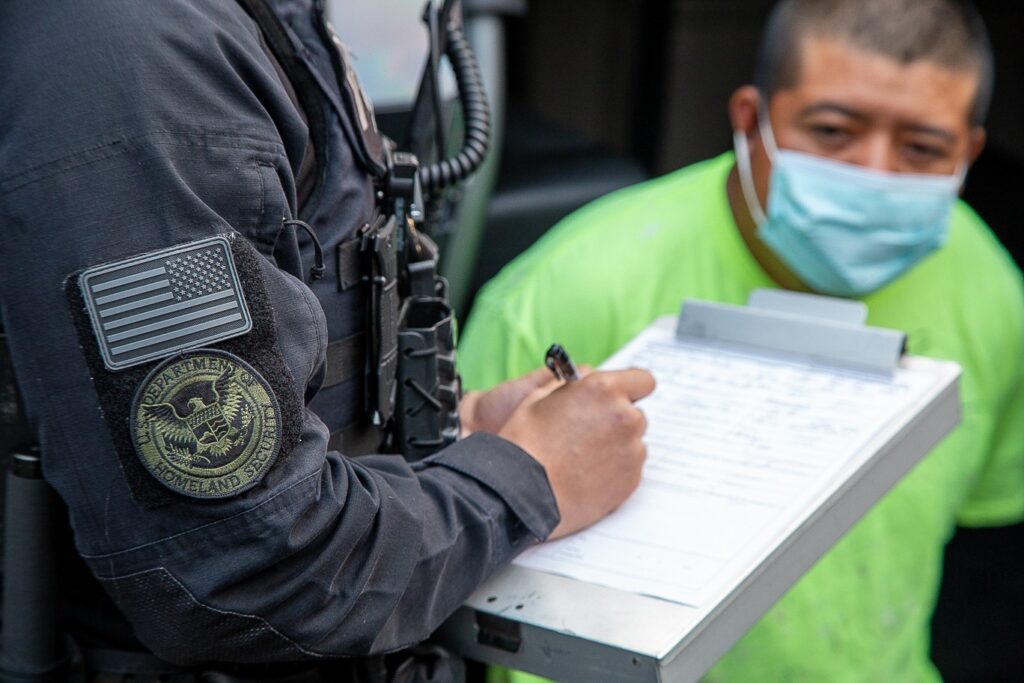
PHOTO COURTESY U.S. IMMIGRATION AND CUSTOMS ENFORCEMENT
The Hidalgo County Sheriff’s Office is preparing to comply with a new state law that requires large counties to partner with U.S. Immigration and Customs Enforcement, formalizing cooperation between local and federal agencies on immigration enforcement.
Under Texas Senate Bill 8, signed into law June 20, sheriffs in counties with populations of 100,000 or more must enter into 287(g) or similar agreements with ICE.
Section 287(g) of the Immigration and Nationality Act allows ICE to partner with state and local law enforcement agencies. The goal of the program, according to the ICE website, is to enhance cooperation.
The law takes effect Jan. 1, 2026, and is part of the state’s effort to expand immigration enforcement at the local level, according to the bill.
Raul Gonzalez, Hidalgo County public information officer, said the department already allows ICE to perform its duties inside the county jail and does not expect the new law to change operations or staffing.
Gonzalez said the Sheriff’s Office does not directly enforce immigration laws but has agreements in place with the federal agency.
“We allow ICE to perform their duties and responsibilities in accordance with mandated requirements,” he said. “There’s no impact on the community. We continue to operate as normal and ensure a safe environment.”
According to the ICE website, the Warrant Service Officer program allows the agency to train, certify and authorize local law enforcement officers to serve and execute administrative warrants on individuals in their custody.
The American Civil Liberties Union of Texas has previously raised concerns about the use of detainers and 287(g) agreements, saying they can erode trust between immigrant communities and local law enforcement.
In a Sept. 10 ACLU statement posted on its website, the organization said partnerships like these “increase the risk of wrongful detentions and make immigrant communities less likely to report crimes or cooperate with local law enforcement.”
SB 8 requires sheriffs to maintain these agreements once in place.
The Texas Attorney General’s Office can take legal action against sheriffs who fail to comply, according to the bill.
The law’s implementation date is less than two months away, and Gonzalez said the Sheriff’s Office has not set an internal timeline.
“Right now, we continue to operate as we have,” he said.
More than 70 law enforcement agencies nationwide participate in the 287(g) program, according to the ICE website.
Hidalgo County joins other similarly-sized Texas counties, such as Tarrant, Colin and Galveston in preparing to comply with SB 8 ahead of its 2026 deadline.