Jose Rodriguez/THE RIDER
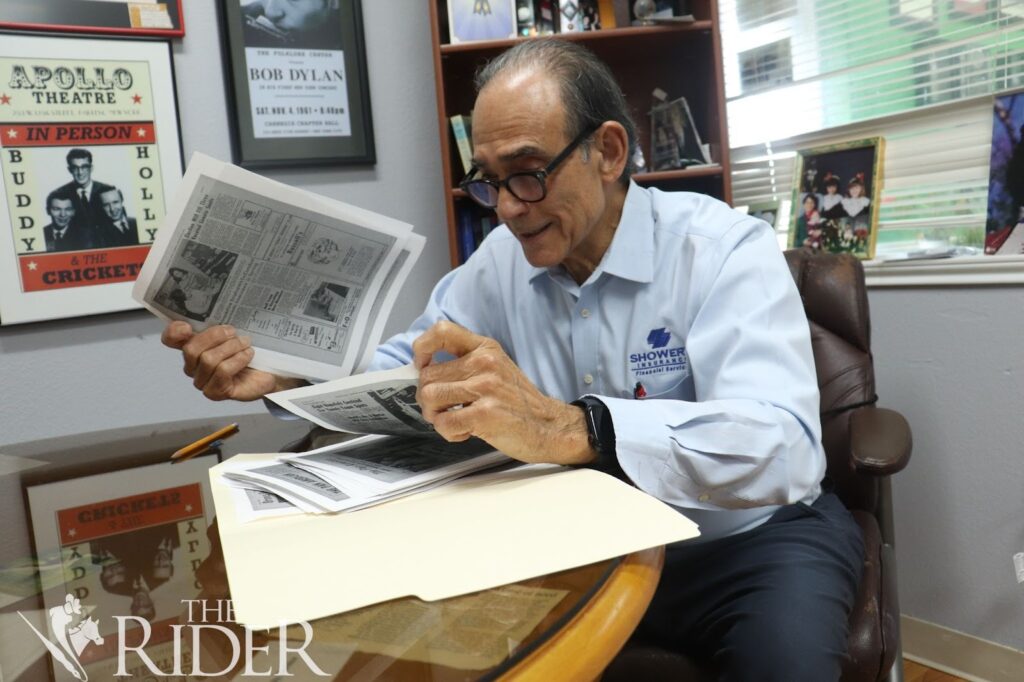
Long before UTRGV carried its current name, students at the University of Texas–Pan American gathered near the Bronc statue to oppose U.S. involvement in Vietnam. Among them was alumnus Aziz Showery, who said conversations with returning soldiers shaped his decision to speak out.
Showery, a Rio Grande Valley longtime resident, opened his family-owned insurance agency in 1989, according to Aziz Showery Insurance Agency, Inc.’s website.
“[Soldiers] were very unhappy about being there because they felt like whatever they were doing was not right,” he said.
Showery said the issue was personal as his friends were being sent to fight and feared he could be next.
“I lost some friends in Vietnam,” he said. “So, I just said, ‘No, we have to say something about this war.’”
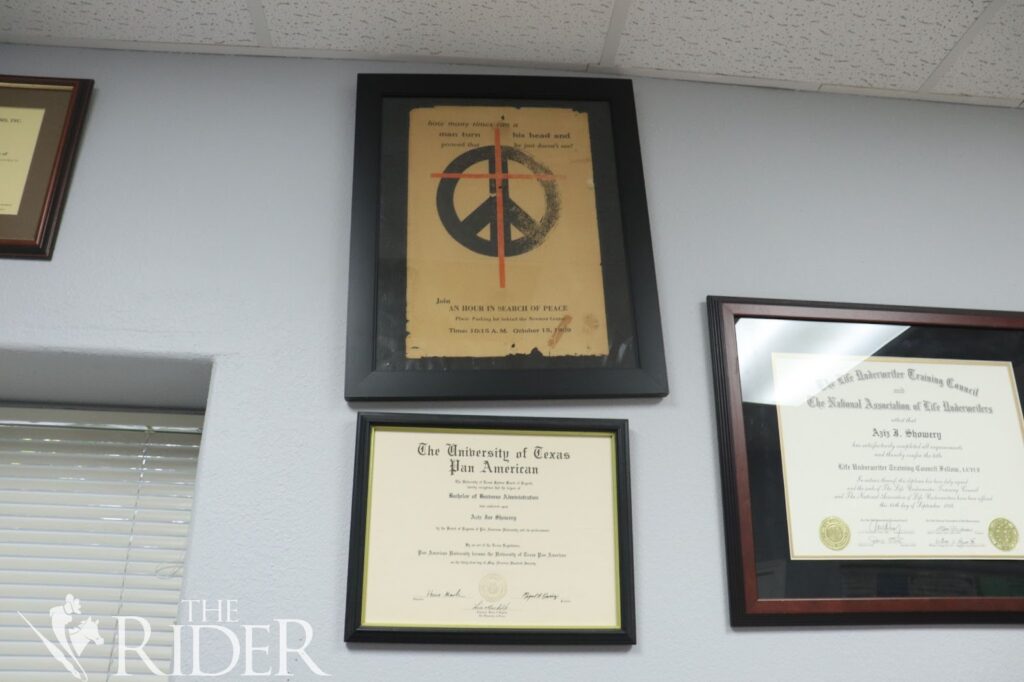
Showery said he and other students organized a demonstration near the Newman Catholic Student Center. Participants gathered and displayed posters opposing the war.
He said university officials disagreed over how to respond, adding one administrator warned students not to protest, while an English professor affirmed their constitutional right to do so.
“You have free speech,” Showery said. “You can protest whatever you want to protest.”
Jose Rodriguez/THE RIDER
He added opposition to the war carried consequences beyond campus. His views followed him into the job market after graduation.
“When they asked me that question, ‘Did you support the Vietnam War?’ and I said no, I didn’t get hired,” Showery said.
He said he later became an educator, working with migrant students pursuing high school equivalency diplomas and teaching at the legacy institution. Showery added those experiences reinforced the empathy and social awareness that had shaped his activism.
More than five decades later, student demonstrations continue to draw attention. While the issues differ, he said the motivations behind protest remain familiar.
“Every time I see people who protest whatever they protest, I say, ‘You’re right on,’” Showery said.
Despite differences, he said he believes the impulse to challenge perceived injustice persists.
“I think that spark that we learned from protesting the Vietnam War is still there,” Showery said.
The UTPA alum emphasized the importance of constitutional protections, particularly freedom of speech, which he said allowed students in his era to organize publicly without fear of legal retaliation.
Reflecting on his experiences, Showery added each generation must decide for itself whether to speak out.
“If you don’t stand up for what you think is wrong, then, you’re going to lose what you have,” he said.
Showery urged students to approach civic engagement with empathy, encouraging them to consider how policies and events affect others.
“If you were in their shoes, how would you want to be treated?” he said.
More than half a century after students gathered at the Bronc statue to protest the Vietnam War, he said public dissent remains a vital part of democratic life and hopes future generations will continue to use their voices.