
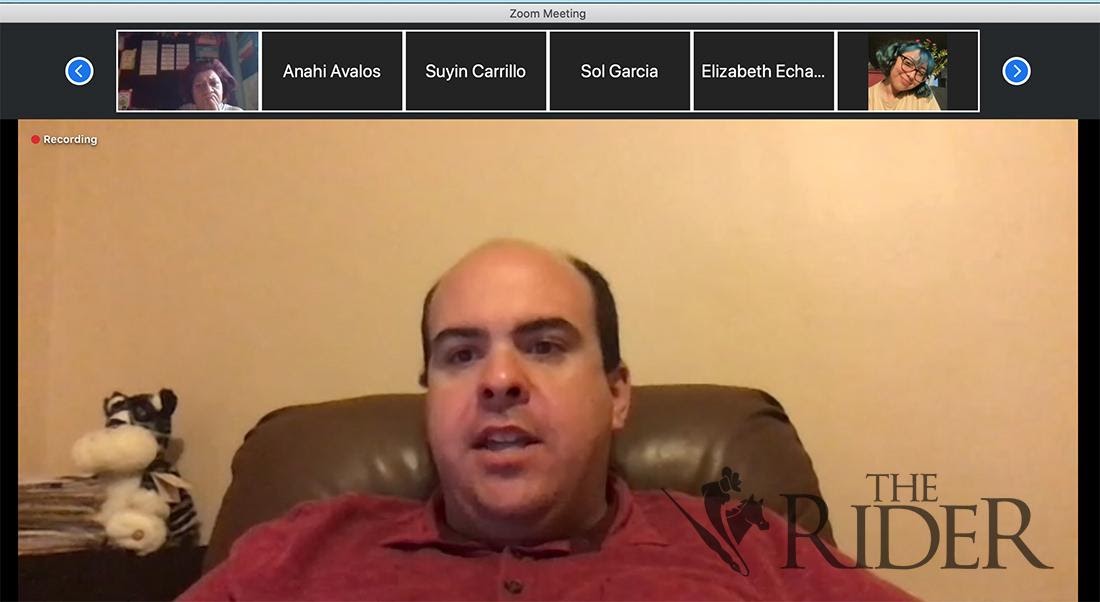
SCREENSHOT TAKEN BY AALIYAH GARZA DURING THE NATIVE AMERICAN HISTORY MONTH: LAND DISPUTES AND THE IMPLICATIONS OF CURRENT SUPREME COURT RULINGS PRESENTATION NOV. 9 VIA ZOOM
Sol Garcia | THE RIDER
To some people, Thanksgiving symbolizes turkey and sports. To Native Americans, the day may hold a different significance.
Ashley Leal, a UTRGV education doctoral student, is a member of the state-recognized tribe, Lipan Apache Tribe. Since childhood, Leal has celebrated Thanksgiving and will continue to do so this year. To her, though, Thanksgiving is another day to give thanks.
“[Thanksgiving] is part of our modern-day culture, so I do [celebrate] Thanksgiving,” Leal said. “That’s something I grew up with, but it’s also a different type of how we give thanks and what we give thanks for.”
Every morning, Leal gives thanks for another day and believes other Native Americans do, too, she said.
“When we wake up, we give thanks for the land, we give thanks for our people and for another day of life,” she said. “That’s for me, personally, but I think all Native people do that, too, because we are very much connected with the land.”
Last week, Leal attended a presentation that focused on changing the narrative of Thanksgiving in the classroom that resonated with her.
“A lot of children, they end up learning at preschool, kindergarten, those are the first idea[s] of what Thanksgiving is,” she said. “Pilgrims and Indians [are] what people stereotype all Native Americans to be … with the war bonnet and the headdress and the feathers. It’s important to remove this traditional narrative of what we picture Thanksgiving to be.”
Rio Grande Valley residents who are interested in learning about tribes in the Valley should attend meetings where people can view some Native American cultural practices and support the tribe by purchasing from vendors, when they are open to the public, Leal said. However, due to COVID-19, the Lipan Apache Tribe could not invite the community to its spring and fall meetings this year.
“Unfortunately, this year, we’re not able to open it up to the community,” she said. “Hopefully, next year we’ll be able to do that and have it open to the public again. This year would have been our 50th-year family powwow.”
While Leal chooses to celebrate Thanksgiving, many other Native Americans choose not to and consider it as a day of mourning, said Thomas Britten, a history professor who specializes in Native American history.
“For some, they would [view] Thanksgiving as mourning and fasting,” Britten said. “How can we celebrate an event that seems to kind of gloss over centuries of exploitation and conquest?”
In 1621, Thanksgiving originated when the Wampanoag Tribe included the Puritans in their annual feasts, and some Native Americans may feel that Thanksgiving is the only day they are considered, he said.
“It’s the one day of the year [when] non-Indians give any thought to Indians at all,” Britten said. “After Thanksgiving is over, Indians are relegated to the periphery.”
However, since Native Americans are a diverse group, others may see Thanksgiving as a day to enjoy with loved ones, he said.
“It’s more like, ‘This is a nice day for us to get together, and rest, and share a meal with each other and enjoy each other’s company,’” Britten said.
To honor and recognize Native American cultures, November was designated as Native American Heritage Month during George H. W. Bush’s presidency, he said.
“[It is] to raise awareness, to celebrate Native American cultures and histories and celebrate their contributions to the national fabric,” Britten said.
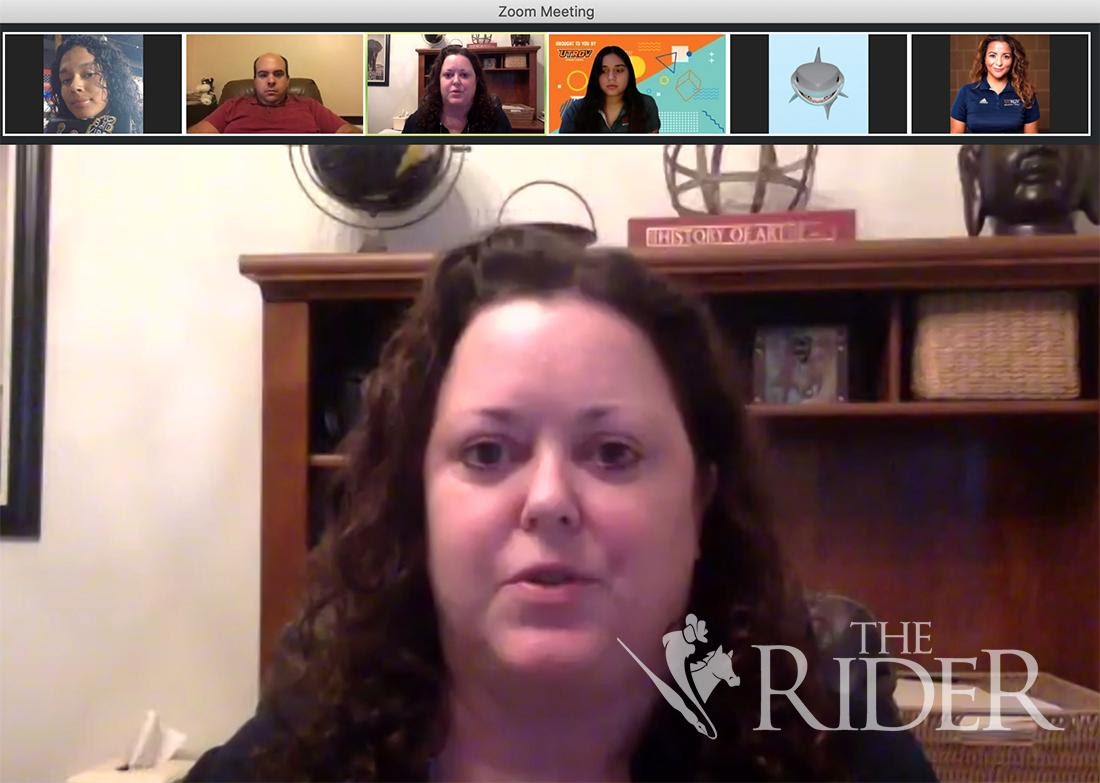
SCREENSHOT TAKEN BY AALIYAH GARZA DURING THE NATIVE AMERICAN HISTORY MONTH: LAND DISPUTES AND THE IMPLICATIONS OF CURRENT SUPREME COURT RULINGS PRESENTATION NOV. 9 VIA ZOOM
To commemorate Native American Heritage Month, the Student Union hosted a virtual presentation last week on land disputes and the implications of U.S. Supreme Court rulings with speakers Linda English, a history associate professor, and Andrew Smith, a political science lecturer.
English began the presentation with the Indian Removal Act up to American Indian territory in the late 19th century, and Smith’s presentation focused on recent legal cases between tribes and the U.S. government.
Haylin Luna, a biology senior, attended the presentation and believes events that recognize minorities, such as the Student Union’s presentation, help foster unity in communities.
“It helps [minorities] see ‘People are willing to learn about my views and opinions,’” Luna said. “It just helps create a unity between everybody because they see that there’s people willing to learn about them, and they’re willing to teach you.”
On Nov. 23, the Civic Engagement Alliance hosted an online event to learn about Native American Heritage Day, which is observed on Nov. 27, according to VLink.
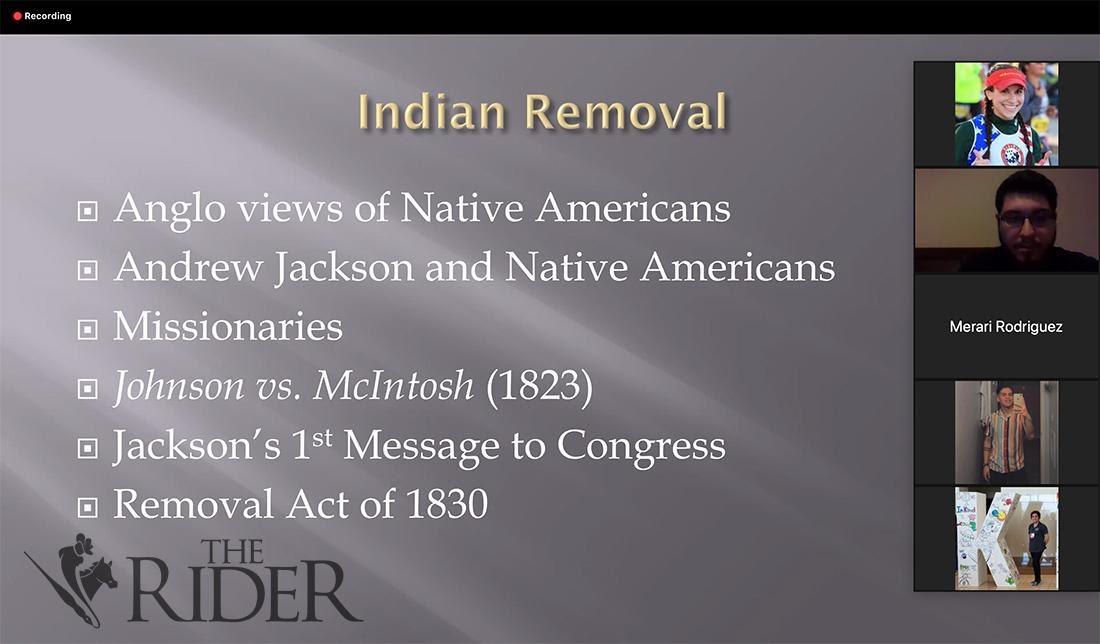
SCREENSHOT TAKEN BY AALIYAH GARZA DURING THE NATIVE AMERICAN HISTORY MONTH: LAND DISPUTES AND THE IMPLICATIONS OF CURRENT SUPREME COURT RULINGS PRESENTATION NOV. 9 VIA ZOOM
About The Author