Valeria Tokun Haga/THE RIDER
The UTRGV Office for Sustainability, in partnership with the Environmental Awareness Club, launched a new campaign to stop the death of migratory and local birds on both university campuses.
Stop the Thud is a campuswide initiative that aims to keep birds safe by reducing the risk of strikes against buildings, according to the office’s website.
Jeremy San Miguel, assistant director for the Office for Sustainability, said the campaign is one that other universities have adopted, too.
“It’s awareness and effort to do research to have a measure put in place, after this research is done,” San Miguel said.
Anthony Ho-Shing, an environmental science sophomore and president of EAC, said the campaign is focused on the diversity of avian species in the Rio Grande Valley.
“The Valley is one of the biggest birding spots in the nation,” Ho-Shing said. “It’s a billion-dollar industry. Through the club, I learned a lot about the local environment and felt more connected to it.”
He added he wanted to start the campaign on campus through his social media work with the Office for Sustainability.
“A lot of [students] said they saw dead birds around campus,” the president said. “Because of that, I wanted to start this initiative to protect them.”
San Miguel said Ho-Shing was the student who brought up the concept of the campaign.
“We support our students, so we said yes if he believed it was worth chasing,” he said.
Valeria Tokun Haga/THE RIDER
The Office for Sustainability and the EAC created a Microsoft Forms link for students to report any dead birds around the buildings.
“The first step of this campaign is to gather information through this reporting system,” Ho-Shing said. “Students can take a picture and add a small description of what happened.”
San Miguel said if enough reports are made, the office can speak to UTRGV officials for future growth since the campaign is still in the research stage.
According to Ho-Shing, the reports from students can help the EAC create a map illustrating where most strikes happen.
He added the club needs more reports for students to be able to ask the university for funds.
“If we don’t get more reports, this thing is not going to get off the ground,” Ho-Shing said.
San Miguel added the options that could become available are stickers for the windows or windows safer for birds.
“Because truth be told, the windows themselves can go upwards to $10,000,” he said. “… Stickers might be only a few $100 but, then, you think about how many we need, and it keeps multiplying.”
Sofia Martinez, an environmental science senior and fundraising coordinator for EAC, said she did not think much of the dead birds around campus before joining the club.
“Because of [Ho-Shing] and other people putting [in] the work, I was able to be more aware of the situation happening,” Martinez said.
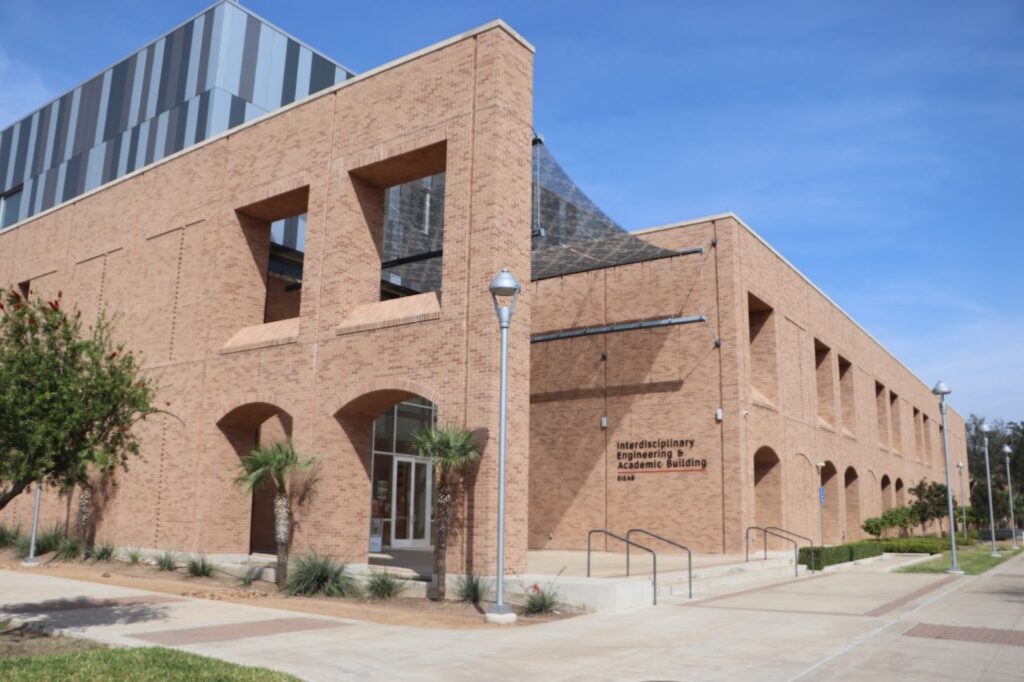
Both members of EAC said most of the reports from students have been made from the UTRGV Interdisciplinary Engineering and Academic Building on the Edinburg campus. As of press time, the Brownsville campus has no reports.
Martinez added she learned of a window-cover technique to help with bird collisions when she visited the National Butterfly Center in Mission.
“It was this type of metal mesh in the windows,” she said. “I didn’t know what it was. After they explained it … I thought it would be interesting to have them on campus.”
San Miguel added the Office for Sustainability wants to make sure they do appropriate research before any resources are decided.
Ho-Shing said university officials require 200 student reports to prove the campaign’s impact.
“I think we can feasibly hit that in a semester,” he said. “But other than that, it’s not really a benchmark, it’s more of, like, if people higher up feel it’s a problem worth addressing.”

Valeria Tokun Haga/THE RIDER