

Samantha Cantu/THE RIDER
Some people think of art as something you see in a quiet gallery, kept safe behind glass. For Crischelle Navalta Barnes, a Filipina Edinburg resident, art lives in everyday things, such as feeding a family, cooling off a child on a hot day, or giving a toddler and their puppy a place to sit.
A new art exhibition highlighting the cultural heritage of the Philippines is now on display in the Visual Arts Building on the Edinburg campus. The display is in partnership with the Rotary Clubs of Mission and Edinburg and Rotary District 5930.
It will be on display through the end of summer and focuses on the theme, “Home is art.”
The exhibit was created to highlight Filipino culture as seen in daily life. Navalta Barnes, senior director of teacher leadership at IDEA Public Schools in the Rio Grande Valley, said the curation process included looking over photos from the family archive to select objects both culturally meaningful in utility and memory.
“When I think about, like, any community, or all the different communities in the world, a lot of the relics or like artifacts that we have is art that lives in their home,” she said.
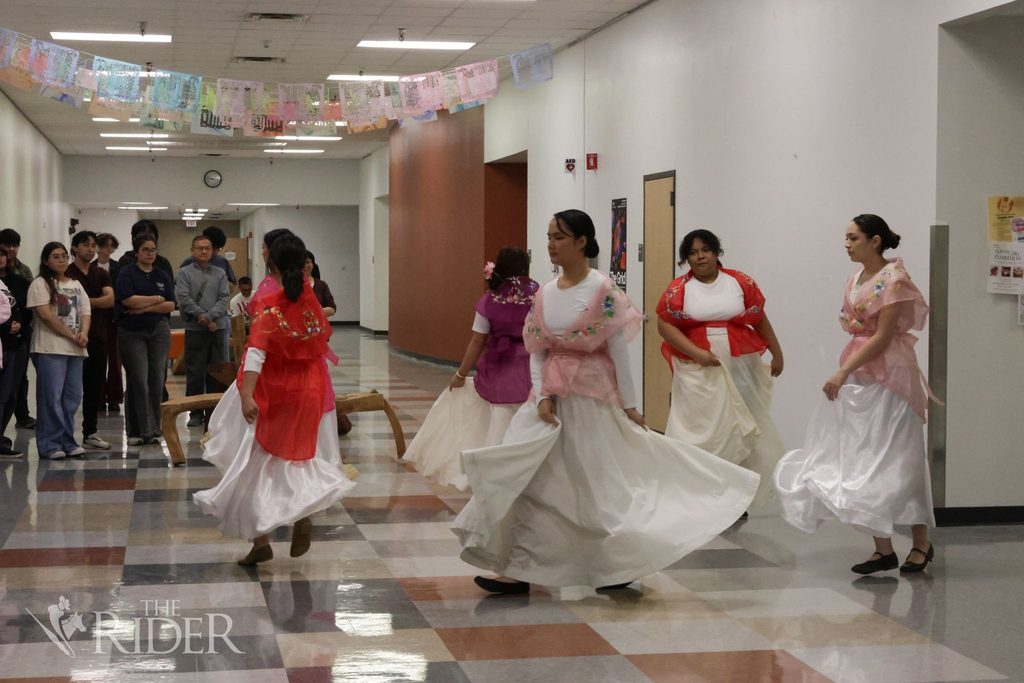
To bring the exhibit to life, Navalta Barnes said she knew the reception needed movement. She recruited the RGV Teens, a local Filipino youth group, to perform traditional dances at the event.
“We wanted to also show dance or anything traditional that was connected to art,” Navalta Barnes said.
The performance showed how dedicated the group is to their heritage, she said.
Navalta Barnes said having the youth take part was an important way to link the community’s past with its future.
The exhibit includes handmade items that connect the Philippines and the Valley. One of these is the Bilao, a traditional round, flat-woven basket, typically made from bamboo or rattan and used to winnow rice by separating grain from just and chaff.
“But it’s used not just for sorting rice,” Navalta Barnes said. “You can use it for putting all your vegetables on it right before you cook. … It’s multifunctional.”
Samantha Cantu/THE RIDER
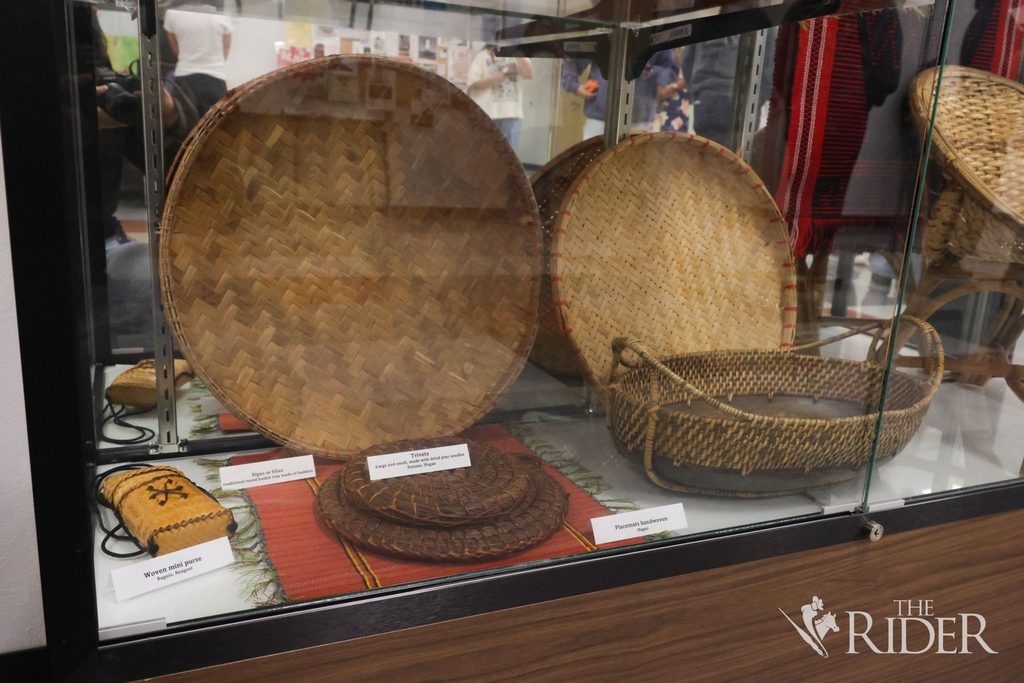
Other pieces show how people live in a tropical climate, like the Pamaypay, a traditional fan often made from native materials such as woven burin palm, anahaw leaves, bamboo or fine piña silk.
But the most meaningful piece in the collection for Navalta Barnes is a simple wooden stool, she said. It is a rare reminder of the childhood she left behind when her family immigrated to the U.S.
“I have very few childhood photos, just because we didn’t take everything with us,” Navalta Barnes said. “And like, I have one with our dog and the dog sitting on the stool, and it’s just so funny, and I’m three years old [in it]. … I was like, ‘I used this stool so much as a child.’”
Today, the stool is still an important part of her home, she said. Her nephews love it so much that they often argue over who gets to use it, choosing it over newer plastic stools.
The exhibit shows physical artifacts, but Navalta Barnes also said she wants to inform the community about the deeper meaning of Filipino staples now popular in the West, especially ube, a bright purple yam.
She said ube is now a popular flavor in coffee shops and desserts, adding it has almost sacred roots.
“Ube, like, was so cherished by indigenous people in the Philippines that they would, like, kiss it,” Navalta Barnes said. “When there’s no food available, like, you dig in the earth, get the ube, and it’ll give you all the sustenance that you need.”
She said the installation is part of a growing movement to share Filipino culture in Edinburg and the excitement will keep going this summer with the community getting ready to celebrate the Philippines’ Independence Day on June 6.
Navalta Barnes said the city’s welcoming spirit is why these events are held there instead of in nearby towns.
“I feel like Edinburg is, like, loving on us,” she said. “Edinburg has been super welcoming so we continue to come back here.”
For upcoming cultural events, visit edinburgarts.com.

Samantha Cantu/THE RIDER
About The Author