Mykel Del Angel/THE RIDER
Two UTRGV professors from the School of Integrative Biological and Chemical Sciences are part of a multi-institutional collaboration to monitor climatic and water-related conditions in the Rio Grande Valley via AI-biodegradable sensors.
The collaboration was born from a $1.2 million grant funded by the Minority University Research and Education Project Earth Science Systems Research at NASA.
The three-year grant started in August 2025 and established the Virtual Institute for Temporal and Additive Learning project.

Sofía Cantú Sauceda/THE RIDER
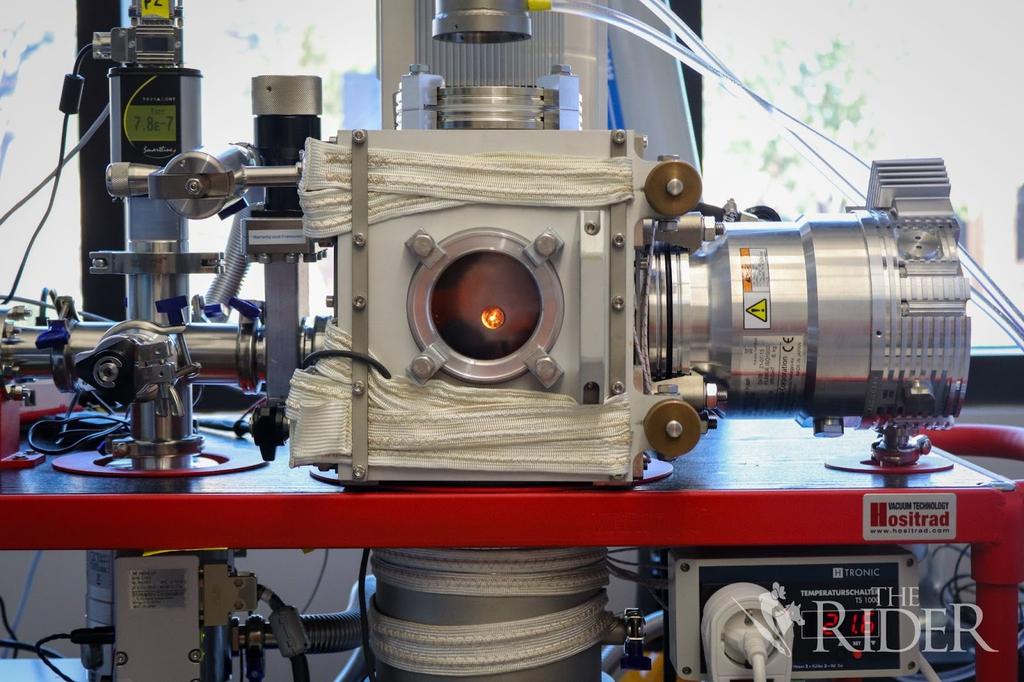
Teresa Feria Arroyo, the SIBCS director and principal investigator of VITAL, said the goal of the project is to create biodegradable sensors that can measure parameters such as temperature, precipitation and humidity. It will be a combination of research and course-based education.
“We’re still talking about the parameters that are going to be measured with the sensors,” Feria Arroyo said. “We already have some [sensors] in the market, but those are not biodegradable.”
She said the sensors will also be used alongside historical data from NASA to build maps of potential outbreaks of preventable vector-born diseases.
Feria Arroyo said the Valley is an important region to place the equipment because of the environment, the people, the ecosystem and the fact it is a flooding area.
“All this makes this region unique in order to address this project, this education component and this community-outreach, service-learning activities,” she said.
Mykel Del Angel/THE RIDER
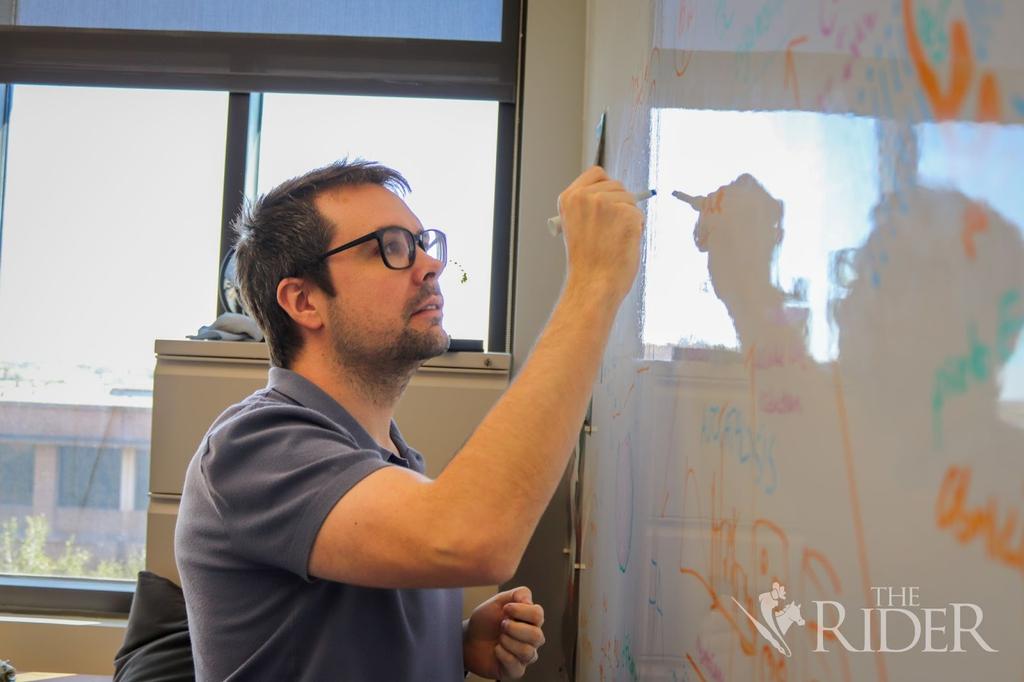
Dr. Eloi Camprubi-Casas, assistant professor of astrobiology and co-principal investigator of VITAL, said his role in the project is based on the geological and planetary sciences side of the project.
“I want to see if this network of sensors can tell us something about any parallelisms we might see between the drying lower Rio Grande Valley and drying ancient Mars,” Camprubi-Casas said.
He added the region has experienced decades of drought and heavy water usage.
Camprubi-Casas said the grant is a great way to connect universities across Texas.
“The students are the heart of it,” he said. “In the future, [the grant] will help with teaching in class.”
Camprubi-Casas added his undergraduate students will learn about databases, how to use them and the information they store.
“They will work not only on crazy ideas of what they think missions would be like but actually use real mission data,” he said.
Feria Arroyo added “this is the core of this university, especially for the students that we’re serving as a Hispanic Serving institution.”
Since the grant was awarded last fall, the team has worked on recruiting and sharing the project with students and testing some biodegradable components, according to Feria Arroyo.
“It’s been exciting, so far,” she said. “In some weeks from now, the people from the different universities will start exploring the area and see where the sensors are going to be located.”
For VITAL, the university will work alongside Chukwuzubelu Ufodike, assistant professor in the Department of Engineering Technology & Industrial Distribution at Texas A&M University; Matthew Minus, assistant professor of chemistry at Prairie View A&M University; Suzanne A. Pierce, assistant professor of research in the Environmental Science Institute at the University of Texas in Austin; and Francisco Guajardo, chief executive officer of the Museum of South Texas History.
The Museum of South Texas History, located in Edinburg, will help grow community outreach by sharing findings, tools and education components about the project and its findings, according to Feria Arroyo.
For the future, Camprubi-Casas said the project is important to UTRGV to show the university works in different ways.
“I think it shows that we’re not one-trick ponies,” he said. “I don’t think we ever were, but I think people sometimes look at us like that.”
Feria Arroyo said she hopes to be able to empower students and the community through VITAL.
“We want to bring them information about NASA, the mission, what they offer and give them potential career options,” she said. “And we want long-lasting success for who is participating as well as the community.”