

PHOTO COURTESY UTRGV ATHLETICS
As travel-heavy schedules ramp up during the semester, student athletes say they sometimes find themselves having to balance academics and competitions, but Athletics staff say systems are in place to help them manage any mental strain.
Letty Hernandez, associate athletic director for Academic Services, said baseball, tennis and golf are some of the programs that travel frequently to compete.
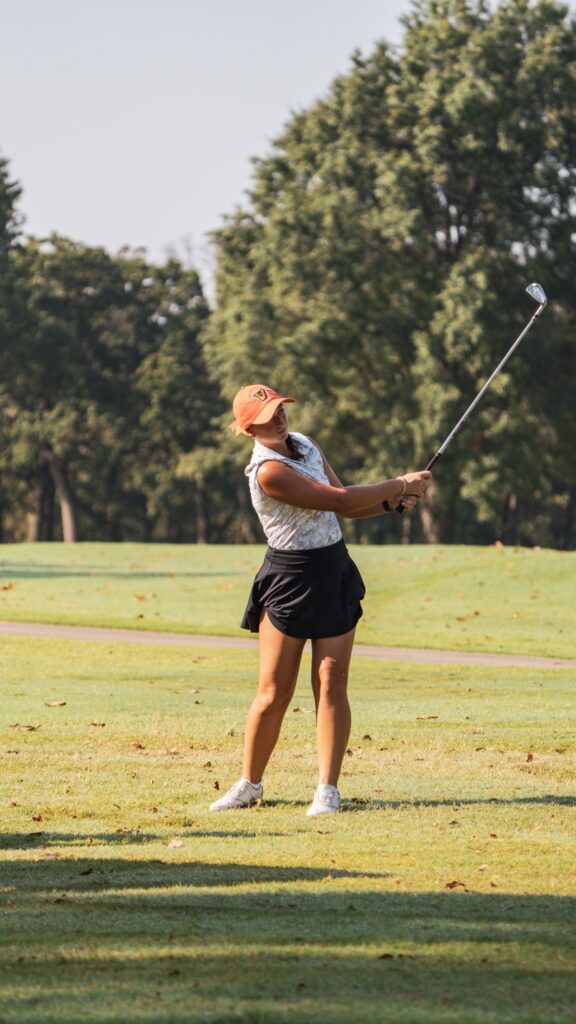
Junior golfer Preston Saiz said trips to compete can be long and require academic preparations beforehand, such as completing her assignments ahead of time and communicating thoroughly with her professors.
“Most of our trips usually fall on Saturdays and Sundays, all the way up to Tuesday and Wednesday,” Saiz said.
Despite trying her best to be prepared, she admitted she sometimes accidentally forgets a few things.
“It’s a little hectic when we’re on the go and, also, there’s sometimes no internet to get online and do it,” Saiz said. “So yeah, it’s definitely stressful.”
The golfer said the hours committed have an overall toll on her energy.
“It’s a lot of early mornings and, then, getting home very late,” Saiz said. “… When you get home from traveling, you don’t really have any energy to do your assignments. So, I guess that also comes with doing it ahead of time and really having to be proactive about it.”
She added her courses for the semester are carefully planned around her season schedule to allow for as many in-person classes as possible and believes it “helps a lot.”
Hernandez said systems within the Athletics department aim to minimize that strain.
“We meet fairly regularly, myself, sports medicine, strength and conditioning, and our behavior consultant, Dr. [Deepu] George,” she said. “We discuss about students we feel need to be referred for any kind of mental health services, or just any issues that come up to sports medicine staff and advisers. We also talk about what the appropriate next step for that student would be.”
The collaboration is the effort of a group known as the mental health task force, whose goal is to monitor the well-being of student athletes, according to Hernandez. Part of its goal is to make sure students never have to navigate challenges alone.
“I feel like our students are supported 100%,” she said. “We provide whatever resources they need and, sometimes, us advisers travel with them just to help make sure they stay on track with their assignments.”
Saiz added she has received help from advisers and the university’s Victory Center in the Vaqueros Performance Center.
“I’ve gone to tutoring sessions … and that’s been helpful,” she said. “Then, our advisers are always checking in if you ever need help or anything. Like, they’re always there.”
PHOTO COURTESY UTRGV ATHLETICS
Hernandez added student athletes also have access to multiple mental health resources and the convenience of accessing them in-person or virtually.
“We have the UTRGV Psychology Clinic that’s off campus,” she said. “They’re a great resource that offers counseling services … at no cost to the student. We also have the UTRGV Counseling Center for faster appointments, and the [My Student Support Services] app that allows students to meet with a counselor through their phone at any time.”
Saiz said she believes the Athletics staff does a “good job” at making athletes aware of the resources available to them.
Hernandez said the department also watches out for students that may feel homesick and may not be adapting to UTRGV “very well” and works to identify concerns quickly, which is made possible through effective communication.
“I believe [student athletes] do speak up whether it’s with us or with the sports medicine staff,” she said. “Because they see us so often, I feel like we have that kind of trust. Even if I don’t hear about it, I’ll have somebody in the trainer’s office reach out and ask if we can schedule them for either counseling or evaluation.”
When asked if she believes most athletes come forward, Saiz replied most do, but some might not feel comfortable doing so.
“I think it could be difficult for some athletes,” she said. “They might be worried about falling behind and maybe not being able to play, so they might want to stay quiet about it.”
Hernandez said the overall impact of travel on mental health is manageable, but she also acknowledges there is always room to improve.
“We may not have as many resources as Power Four institutions … but our administrators have been top notch about taking care of our students,” she said. “If we could do more, it would be encouraging our students to come forward, not just for themselves, but for their teammates who may not want to speak up.”
At the mental health task force’s core, Hernandez added she believes the goal goes beyond helping athletes perform well.
“We want them to succeed, not just as athletes but as human beings,” the associate athletic director said.
About The Author