Kayla Martinez/THE RIDER
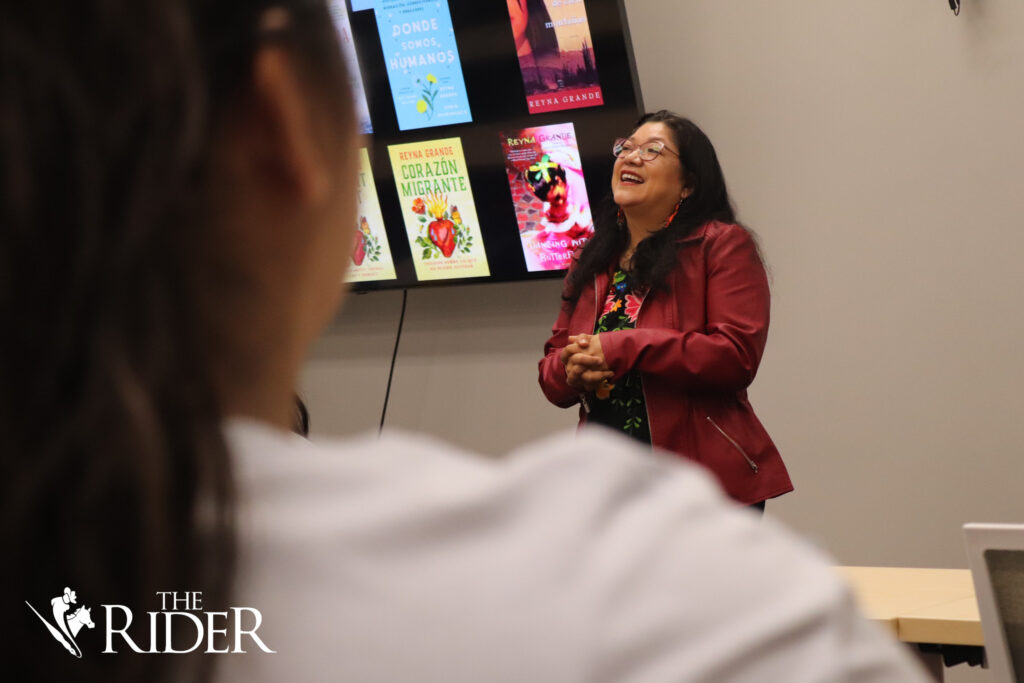
Award-winning Mexican American author Reyna Grande spoke about immigration, representation and storytelling as an act of resistance during an author talk Thursday at UTRGV’s Edinburg campus.
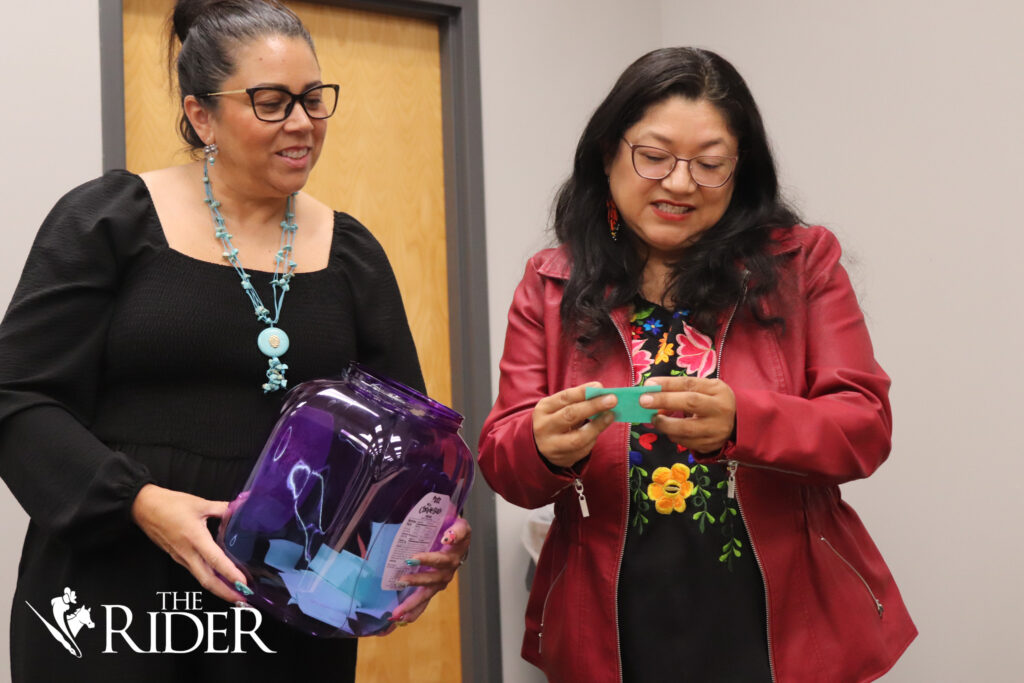
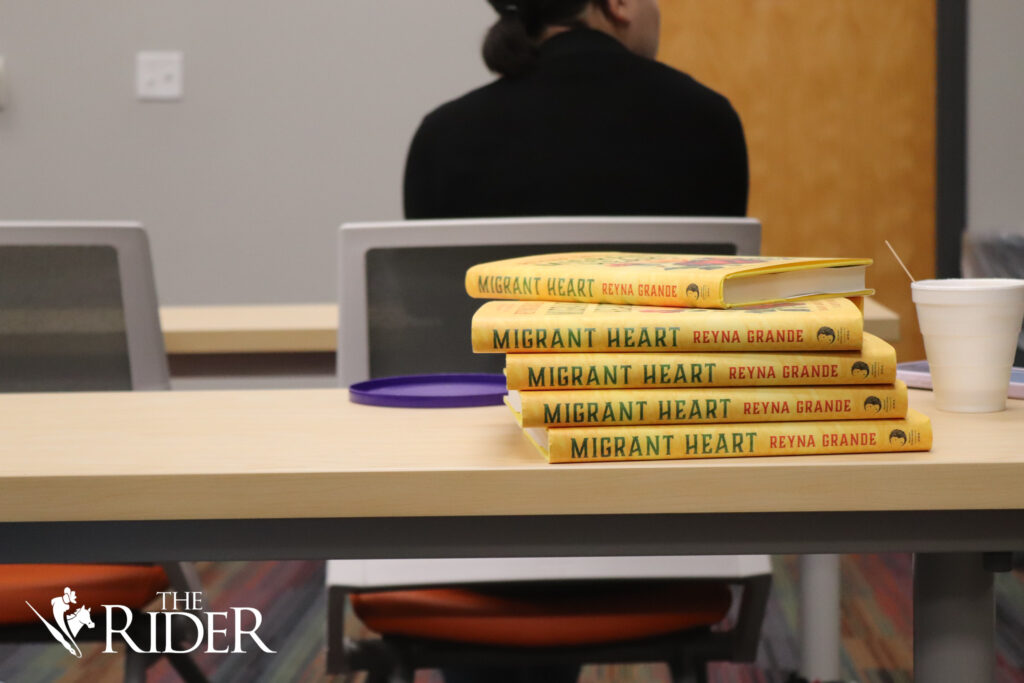
UTRGV’s Mexican American Studies and Creative Writing programs hosted Grande in the Borderlands conference room in the Education Complex. During the event, Grande raffled 20 copies of her latest novel “Migrant Heart” in English and Spanish editions.
Grande, who was born in Iguala, Guerrero, Mexico, immigrated to the United States at age 9. She said she never imagined becoming a writer while growing up because she had not encountered works by Chicana, Chicano or Latino authors.
“If you had asked me in high school, ‘What do you want to be when you grow up?’ I would have never said, ‘Oh, I want to be a writer,’” Grande said during her talk. “I had never read any works by Chicana, Chicano, Latino authors. I didn’t even know that that was a thing.”
Grande said a community college teacher encouraged her to pursue creative writing and introduced her to Sandra Cisneros’ novel “The House on Mango Street.”
Kayla Martinez/THE RIDER
“She was the first teacher to put ‘The House on Mango Street’ in my hands,” Grande said. “And she said, ‘If Sandra Cisneros can do it, you can do it.’”
With her teacher’s encouragement, Grande transferred to University of California Santa Cruz to study creative writing. She later completed her first novel, “Across 100 Mountains,” as her senior thesis.
Grande said she wanted to write about her experiences with her parents leaving Mexico and what it was like growing up as a child separated from them by the border.
“My desire was for people to acknowledge the pain that children go through and how immigration impacts kids,” Grande said.
Stephanie Alvarez, a Mexican-American Studies professor who introduced the author at the event, said Grande was an immediate choice when the program considered speakers for its Humanity Speaker Series.
Alvarez said she wanted students to meet an author whose experiences and work they could identify with.
“Reyna, in her talk, for example, said only seven percent of all published authors are Latinos or Latina,” she said. “And so I think it was really important for people to have a real-life example in front of them and get advice about the process, too.”
Kasandra Garcia, a counseling graduate student, said she connected with Grande’s work on a personal level.
Kayla Martinez/THE RIDER
“I feel connected through the words on the pages, and I’m grateful to see work like hers exist,” Garcia said. “I see myself through her work … Never in my life would I have imagined that I would have met her … It’s a one of a kind of opportunity.”
David Bowles, a professor in the Department of Literature and Cultural Studies, attended the talk as a guest. He said Grande’s stories resonate with people in the Valley, even though she is not from the area.
“All of us came here from elsewhere,” Bowles said. “And [Grande’s] work reminds us of that. It reminds us to show one another grace and to open our arms to immigrants, whether they’re documented or not.”
During her talk and an interview with The Rider, Grande also addressed violence, prejudice and discrimination against immigrant communities. She urged people to continue sharing stories about life along the border, particularly when those voices face attempts at censorship.
“There comes a point where you wonder,” Grande said. “How can we end [discrimination] once and for all, you know? Why do we need to be subjected to this?… We gotta continue to tell the story of the border life… especially at a time where our voices are being silenced, where our stories are being banned. Storytelling for us in our community is an act of resistance.”
About The Author