
Valeria Tokun Haga/THE RIDER
Valeria Tokun Haga/THE RIDER
The City of Brownsville announced on April 21 in a press release that nearly $22 million in grant funding was awarded through the Texas Middle Program to support a major expansion of its Broadband Fiber Project.
“The project is expected to impact approximately 50,000 residents, enhancing access to high-speed broadband for households, businesses, healthcare providers, and educational institutions,” according to the press release.
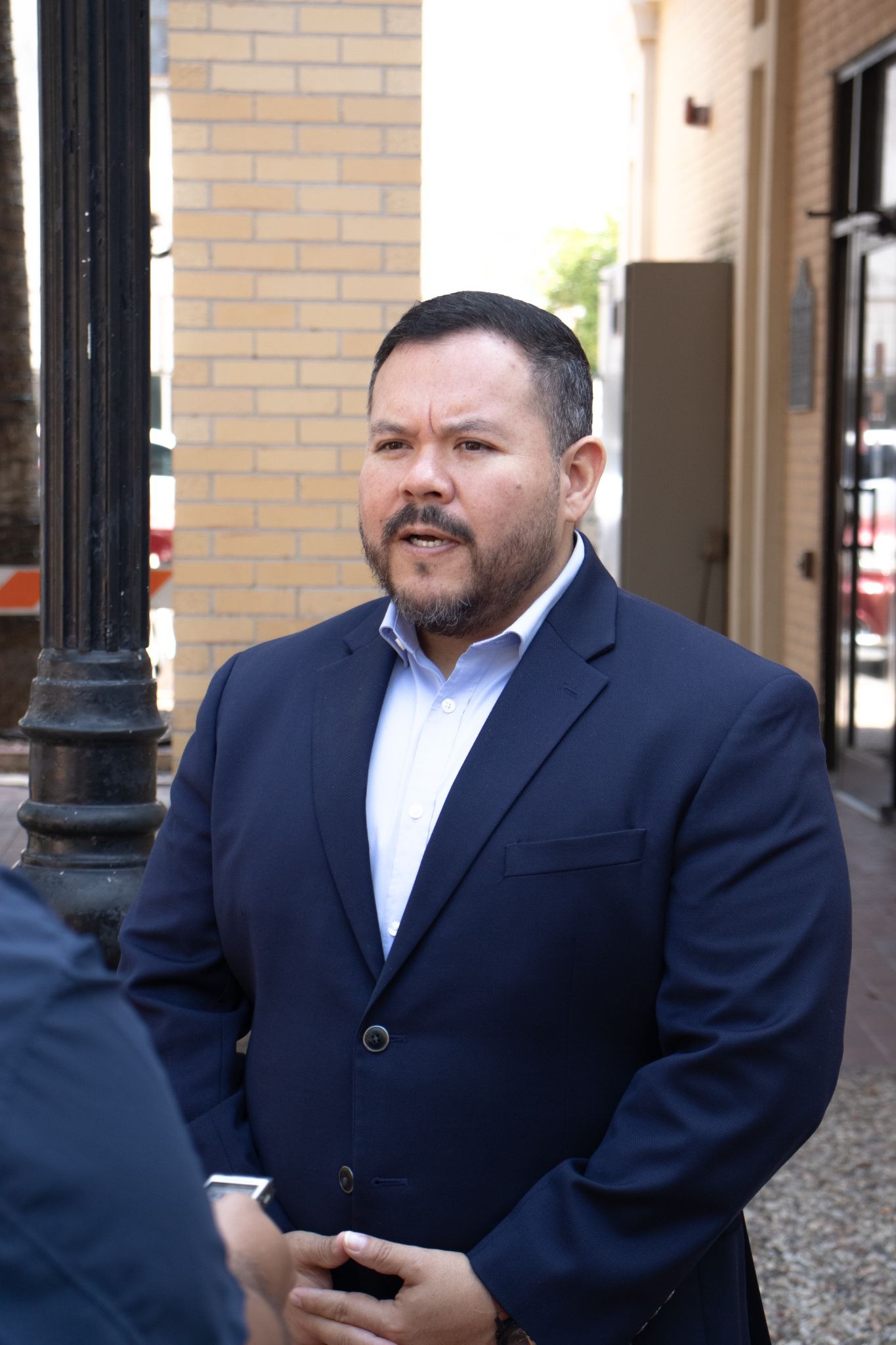
Jorge Cardenas, chief information officer for the City of Brownsville, said the city decided to go out and get an additional footage of miles of fiber to help neighboring cities.
“[It is] to make sure they are enabled as well to get all the connectivity and fast-speed and low-cost internet connection,” Cardenas said.
He added Brownsville has been working on the project since last year, of which two months were spent on applying for financing.
“There was an application that needed to be submitted, and the requirements were that the city had already a middle-mile fiber infrastructure to add additional miles to the project to help additional cities,” Cardenas said. “So, we applied last year around November and, this year, lucky to get that award of almost $22 million.”
He said the next step is to build the additional 130 miles, adding about 17 communities tying into the Brownsville middle-mile fiber.
“The impact will be around 50,000 to 60,000 people in that area,” Cardenas said. “So, going from Brownsville to San Benito way to Rio Hondo, Port Isabel, Laguna Vista, down to Brownsville, and we also included the new city and area, which is Starbase.”
The chief information officer said Brownsville already has fiber infrastructure that allows the city to deploy fiber and wireless internet connection in the area.
“So, we already have our private 5G already covered in the City of Brownsville but, with this additional fiber, we can actually enable other cities,” Cardenas said. “We can enable some and bring our private five connections to that area utilizing our own infrastructure to connect them.”
In 2017, Brownsville was named the worst connected city by the National Digital Inclusion Alliance. With the project, the city is looking to provide a reliable connection for the community benefit, according to the chief information officer.
Cardenas said the city’s expectation is to bring regional collaboration to make everybody see what Brownsville is doing.
“Brownsville is not just thinking about Brownsville,” he said. “Brownsville is thinking about the region and how we can grow this area and making sure that we enable those businesses.”
Jarred Ochoa, a UTRGV electrical engineering junior, said he was not aware about the Broadband Fiber Project but believes it will be “very helpful.”
“Especially with people who lack internet, of course, and just overall I believe it’s beneficial,” Ochoa said.
He added he believes the internet is definitely one of the biggest demands in today’s world.
Luis Delgado, an exercise science freshman, said he was not aware about the project but believes increasing the level of connectivity will be beneficial for Brownsville and neighboring cities.
“So … you could be in connection with your loved ones and also for your classes,” Delgado said. “You need Wi-Fi for your classes.”
About The Author