
Adrian Hernandez/THE RIDER
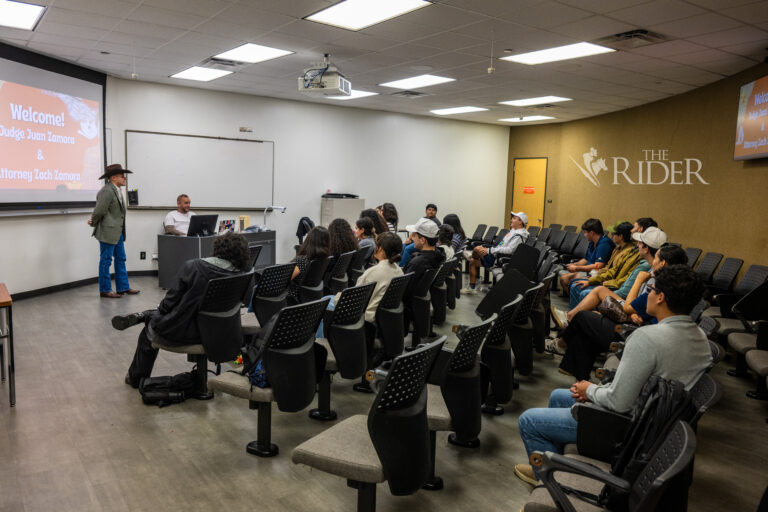
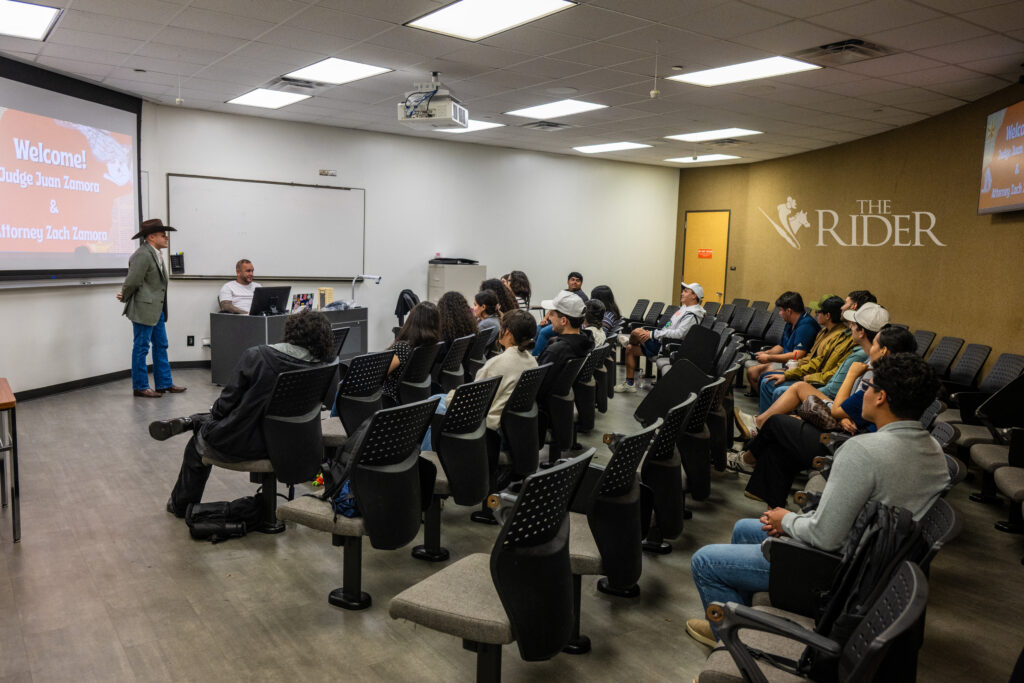
Hidalgo County Judge Juan Zamora advocated for the legalization of marijuana during a discussion hosted by the UTRGV Pre-Law Society on Nov. 9 in the Liberal Arts Building North Room 125, arguing marijuana arrests waste county resources and jail space.
The discussion, led by Judge Zamora and criminal defense attorney Zachary Zamora, covered the moral implications of legalizing THC and marijuana, criminal penalties for drug-related offenses and the future of drug law in Texas.
“We need to do it. We have a big portion of the people that get arrested in our county in jail for marijuana. It is a waste of resources. It is a waste of jail space,” Judge Zamora said.
Judge Zamora mentioned other states where marijuana is legal, including California and Colorado, as examples of how marijuana taxation can generate revenue for public services.
“[California and Colorado] can pay for their public education system by the taxes they put on marijuana,” he said.
He also advocated for legalizing other drugs, arguing doing so could weaken drug trafficking organizations.
“I go a little further. I believe everyone’s an adult, so if you wanna do meth, do meth. … If you really wanna take away power from these drug trafficking organizations, legalize it all,” Judge Zamora said.
When asked about the future of marijuana legalization under Texas’ changing political environment, Judge Zamora expressed interest in the possibility of legalization within the next two years.
“I think within two years … [Gina Hinojosa] won. That’s going to be one of the major platforms she should … do, legalize marijuana,” Judge Zamora said.
Zachary Zamora also shared how his personal experiences and legal background influenced his opinion on marijuana.
Before practicing law, he studied pre-med before changing majors and graduating from Baylor University.
“It’s super common for people to be smoking. … I’m sure everybody knows somebody who smokes,” Zachary Zamora said.

Adrian Hernandez/ THE RIDER
He said his experiences representing criminal defendants has also shaped his opinion on drug-related offenses.
“For one example, we had [a case] the other day where he had multiple cases of sexual assault of a child,” Zachary Zamora said. “And [then] I have somebody with a vape pen. I mean, this guy’s a saint, right? Compared to this [other] guy.”
Students also shared their opinions on marijuana legalization and the penalties associated with marihuana-related offenses.
Hector Barrera, a senior management, said he does not personally smoke marijuana but believes it should be legalized.
“Me personally, I’ve never really smoked. A lot of my friends do,” Barrera said. “I don’t think it’s necessarily bad. I think if you’re not allowed to do marijuana, then you shouldn’t be allowed to drink. … I think it should be legalized if [alcohol] is legalized.”
He added the current felony classifications for marijuana-related offenses as “insane.”
“I think they’re insane. They shouldn’t be felony twos. They should either go back to being felony threes, or misdemeanors,” Barrera said. “Overall, the goal is to make it legal.”
Not all students think that THC, marijuana or other substances are beneficial. Eric Gonzalez, a political science graduate student, said ignoring the negative health effects of marijuana is an obstacle to making it safe.
“Most people know the negative effects of alcohol,” Gonzalez said. “Unfortunately, the growing body of scientific evidence and the general basics of psychology seems to indicate that any behavior that gives you a large spike of feel-good chemicals in the brain has a potential to become compulsive, potentially addictive.”
Gonzalez said executive action changes in the brain while regularly using substances like THC and marijuana.
“This can cause you to struggle with things like motivation,” Gonzalez said. “If you smoke THC products in the morning, you’ll find that your motivation to do things, like study or tackle other challenging things throughout the day, … is reduced.”
Gonzalez also said other substances have more severe health effects, and shouldn’t be legalized, however, he believes in decriminalization and rehabilitation.
“People confuse … decriminalization with legalization,” Gonzalez said. “I don’t think anyone should go to prison for struggling with an addiction … but I don’t think [illicit substances] should be legalized. These drugs have potential to cause severe mental and physical abuse. Sometimes people can’t stop, no matter how hard they try to stop.”
Under Texas Health and Safety Code Section 481.115, possession of a controlled substance classified in Penalty Group 2 is a third-degree felony when the aggregate weight is at least 1 gram but less than 4 grams. Possession of at least 4 grams but less than 200 grams is a second-degree felony.
A third-degree felony in Texas carries a sentence of two to 10 years in prison and a fine of up to $10,000. A second-degree felony carries a sentence of two to 20 years in prison and a fine of up to $10,000, according to sections 12.34 and 12.33 of the Texas Penal Code, respectively.
About The Author