

During its Jan. 31 visit to the Brownsville campus, the UT System Chancellor’s Council Executive Committee (CCEC) learned more about UTRGV, including its research on diabetes, border business, Gulf of Mexico and gravitational waves.
The CCEC convenes several times annually and engages in dialogue with the chancellor, UT System executive officers, UT presidents and faculty regarding special initiatives and issues of importance to higher education in Texas, according to the University of Texas System website.
Patrick Gonzales, associate vice president for Marketing & Communications, said the biggest takeaway from the meeting was that it was a great opportunity for the university to host the chancellor’s executive council.
“We had the opportunity to really show off our campus, our faculty, our staff and our students and really provide this council with a better understanding of what UTRGV is doing to transform higher education and to help improve the entire Rio Grande Valley community,” Gonzales said.
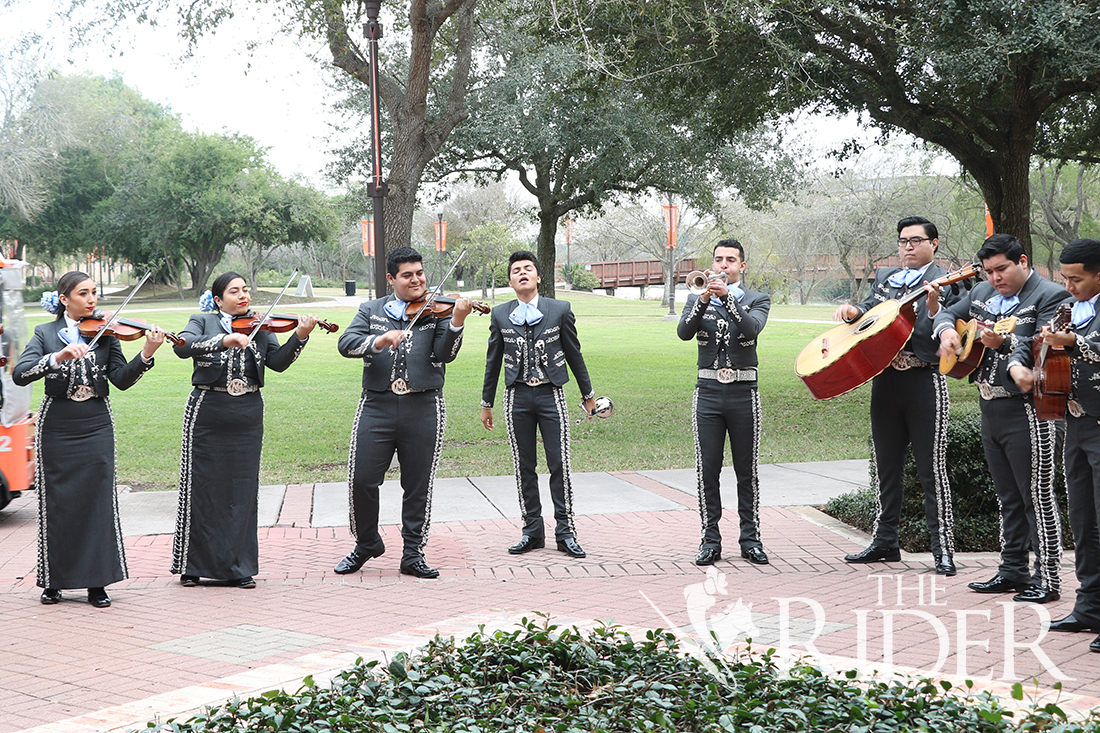
While they checked in, members of the committee were treated to music by UTRGV’s Mariachi Aztlán and later ate lunch featuring Mexican cuisine.
The meeting included six simultaneous breakout sessions in which professors spoke about research or projects they are undertaking.
The sessions included Business on the Border, Confronting a Community Health Care Crisis, When Your Classroom Is in the Gulf of Mexico, The Potential of the UTRGV School of Medicine, The Rio Grande Valley’s Role in the Civil War, and Riding the Wave: UTRGV Scientists Collaborate on Groundbreaking Discovery.
During the Confronting a Community Health Care Crisis session, John Blangero, a School of Medicine professor, spoke about how UTRGV’s South Texas Diabetes and Obesity Institute is working to advance the health of the region with research on diabetes, obesity and other related disorders.
“About 60% of the variation is due to genetics in terms of diabetes,” Blangero said. “But that leaves 40% due to the environment, so what we’ve been doing is trying to turn the whole problem on its head and focus on the environment instead of genetics.”
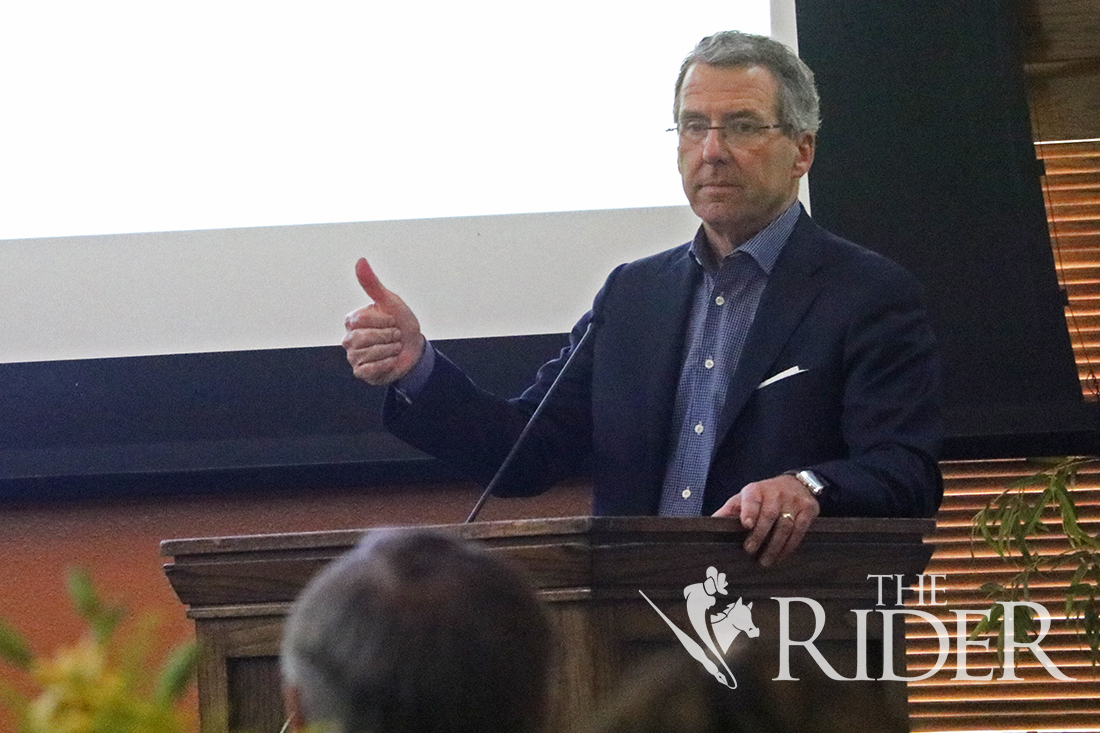
Chancellor James B. Milliken said every time he visits the Rio Grande Valley he is reminded that UTRGV is a model of what higher education could be about.
“In an era where many universities don’t do nearly enough, as [Robert W. Shepard, Chancellor’s Council chairman] mentioned, to drive social and economic mobility, RGV ranks near the top nationally when it comes to turning low-income students into high-income adults,” Milliken said. “And in just four years, [UTRGV President] Guy [Bailey] and his team are getting started and it’s really exciting.”
Bailey said the UT System, since 2014, has invested almost $400 million in the institution.
“That’s why we have our medical school,” he said. “That’s why things, in part, are going so well and we appreciate that.”
Bailey said the institution also wanted to create additional educational opportunities for students.
“In the Rio Grande Valley you could always get a good undergraduate education,” Bailey said. “What you couldn’t do is get that professional degree. Our goal was to provide opportunities to keep students here. You build your workforce by keeping students here. That’s what we aim to do.”
He said they made conscious efforts to ensure that students graduate with minimum debt.
“We’re one of the poorest areas in the state,” Bailey said. “And being able to do that helps our students achieve dramatic social mobility. Our $75,000-tuition guarantee was a big part of that and again, we don’t have these resources these other schools have so we have to manage and work very carefully.”
Last September, Bailey announced the UTRGV Tuition Advantage program, which offers free tuition to
students with a household income of $75,000 or less. Additionally, about half the students with adjusted gross incomes between $75,000 and $100,000 will have reduced tuition and fees as well. The program will take effect in Fall 2020.
Gonzales said the UT System approved a pharmacy program in May 2018 and a podiatry program February 2019 for the university.
The programs have received preliminary planning authority by the University System board of regents and the Texas Higher Education Coordinating Board.
“There are a whole range of things that have been approved for us that would really create opportunities for our students here,” Bailey said.