
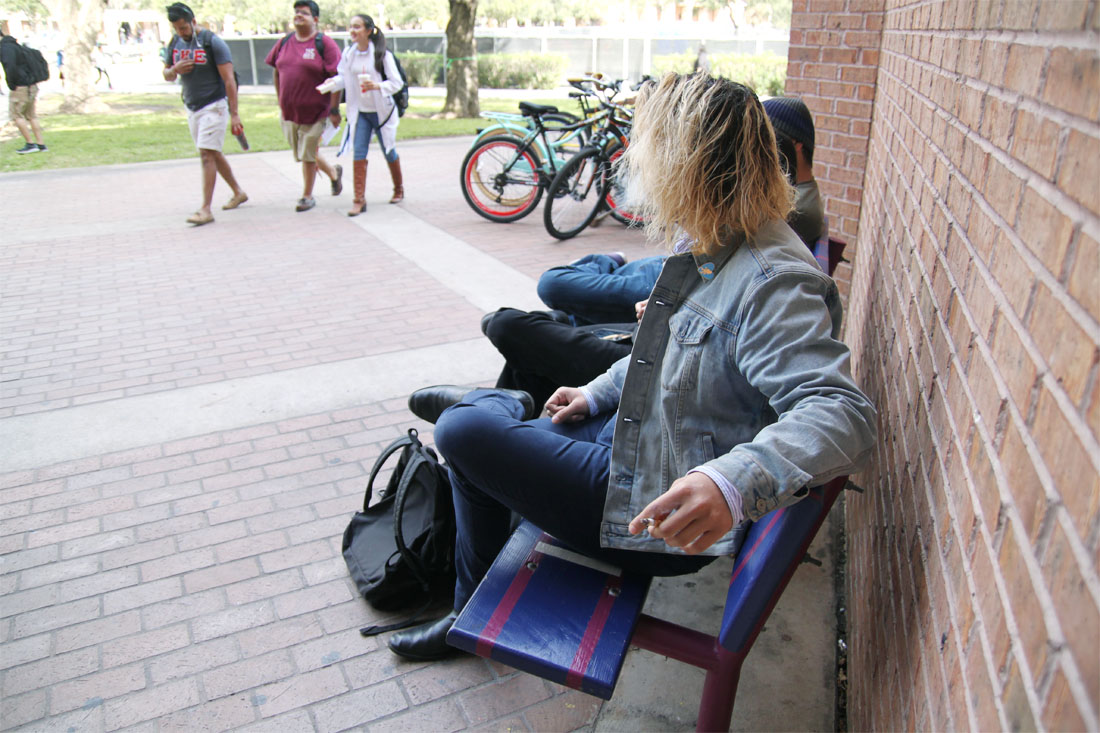
UTRGV has been a tobacco-free campus since Sept. 1, 2015, but that hasn’t stopped some people from lighting up.
The purpose of the policy, as stated in the Handbook of Operating Procedures, is to promote the health, well-being and safety of the UTRGV campus community.
“If you see somebody smoking, you can tell them, ‘Hey, we have a policy, no smoking on campus. Please stop smoking,’” said Douglas Arney, senior associate vice president for operations for Finance and Administration. “Some people are comfortable doing this, some not.”
If students are not comfortable telling a person to stop smoking, they can let University Police know.
“Campus police will then just ask them politely and inform them that there is a no-smoking policy on campus, ‘Please refrain from doing so,’” Arney said.
Also, UTRGV offers a webpage, “Keep UTRGV Tobacco Free,” where students can report a person smoking on campus anonymously.
Those who continue to smoke on campus will be routed to the appropriate person.
“If it’s an employee, it gets routed to the chief human resource officer,” Arney said. “If it is a student, they’ll route it to the dean of students or their designee. If it’s a faculty member, they’re routed to the provost or his designee and if it’s a contractor, they’ll route it to Auxiliary Services or their designee.”
Arney said it’s those individuals’ responsibility to look into the situation and have a conversation with the person smoking.
“It’s a warning the first time … but if it continues to happen with that individual, then it becomes a disciplinary issue,” he said.
For students, there is a disciplinary code of conduct and they would go through that process. For staff, HR has its own discipline process.
“We would do a write-up,” Arney said. “Hopefully, it doesn’t get to that point. It hasn’t yet.”
Faculty have their own process. The chair and dean meet with the faculty member and they make sure the faculty member stops smoking, he said.
“We have a lot of things to do. We will provide you, as an employee, professional counseling and support. We will pay for it,” Arney said. “We have nicotine replacement therapy; we will pay for that.”
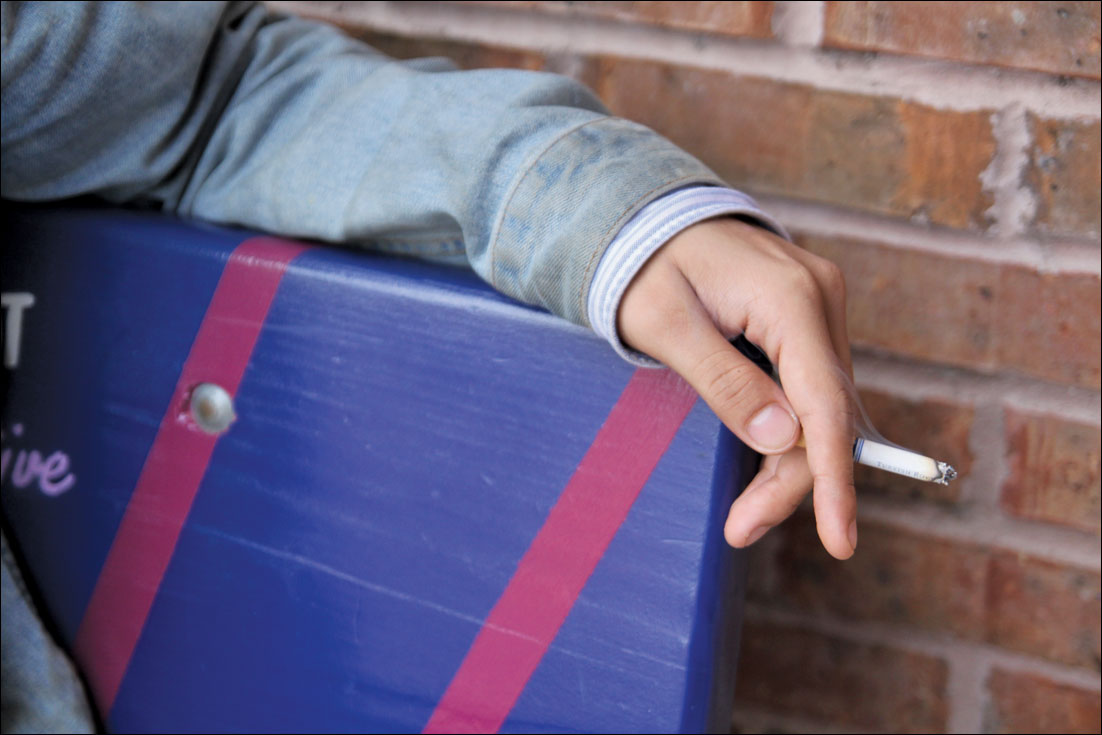
For students, the university offers the Collegiate Recovery Program, where students can get tips to quit smoking.
UTRGV Police Chief Raul Munguia said after his department warns a student to stop smoking, they have not seen them repeat the act.
“There has not been issues with the same person,” Munguia said. “We just follow the policy that exists already.”
Sandra Masso, a freshman exercise science major, said smoking on campus may hurt people’s health.
“I think that smoking on campus is not OK because on campus, we have different types of people that might have major or minor health problems breathing the smoke,” Masso said. “I think that smoking can be left to be done somewhere else rather than on campus.”
About The Author